


What is Auditory Processing Disorder
Auditory Processing Disorder (APD), sometimes called Central Auditory Processing Disorder (CAPD), affects how the brain makes sense of the sounds the ears hear.
APD is relatively uncommon. Studies suggest that up to 5% of school-aged children and 1% of adults experience listening difficulties consistent with APD. Children and adults with APD typically have normal hearing, but their brains struggle to understand and interpret speech, especially when there’s background noise or multiple people talking at once.
People with APD may:
- Find it difficult to follow instructions or conversations, particularly in noisy places.
- Ask for repetition often or seem distracted during conversations.
- Have difficulty remembering information long enough to write it down.
Auditory Processing Disorder can sometimes be confused with autism, ADHD, and dyslexia due to overlapping signs, such as difficulty following instructions, problems with attention, and challenges with language or learning. This makes careful assessment important to diagnose and manage symptoms of APD.
Symptoms of Auditory Processing Disorder
Auditory Processing Disorder affects how the brain understands sounds, not how well a person hears. It’s most commonly identified in school-aged children, but APD can also develop later in adulthood.
Children and adults with APD often have normal hearing but struggle to make sense of spoken language, especially in surroundings with increased levels of background noise.
APD symptoms in children
APD often becomes noticeable when children start school, as the demand to listen increases. Children with Auditory Processing Disorder may:
- Have difficulty understanding speech in the classroom
- Struggle to follow spoken instructions, especially multi-step directions
- Frequently ask for repetition or need information written down
- Take longer to respond when spoken to
- Have trouble concentrating when background noise is present
- Misunderstands social cues such as tones and sarcasm
APD symptoms in adults
Adults with APD often report that listening feels effortful and tiring, particularly in work or social settings. Symptoms in adults may include:
- Difficulty following conversations in group discussions
- Trouble understanding fast talkers or phone conversations
- Needing frequent repetition or clarification
- Difficulty remembering spoken information
- Listening fatigue and reduced confidence in communication
Testing for Auditory Processing Disorder
Testing for Auditory Processing Disorder (APD) is conducted by one of our APD specialists using a special battery of speech-processing tests which measure your active listening skills.
These tests include localisation of sound, discrimination of speech and degraded speech, among others, which can inform an effective management strategy.

Auditory Processing Disorder Management & Treatment
There’s no medication or surgery for Auditory Processing Disorder (APD), but the good news is that its effects can be managed. With the right support, many people notice real improvements in listening, learning, and communication.
After a full assessment, your audiologist will recommend personalised strategies to suit your needs and goals.
Book an APD Assessment
Types of Auditory Processing Disorder
APD can present in different ways, depending on its underlying cause and when it develops.
Clinicians generally categorise APD into several types to help guide assessment, diagnosis, and management. Understanding these distinctions can provide greater clarity about how APD affects individuals across different stages of life and in different clinical contexts.
- Developmental APD: Identified in childhood in individuals with normal hearing and no identifiable cause or known risk factors. In some cases, these auditory processing difficulties may persist into adulthood
- Acquired APD: Develops following a recognised postnatal event, such as neurological injury, illness or infection
- Secondary APD: Occurs alongside, or as a consequence of, peripheral hearing loss. This may include temporary hearing difficulties even after resolution (for example, following glue ear), or reduced auditory processing ability associated with ageing
In most instances, individuals with APD have normal hearing; however, the condition can sometimes coexist with hearing impairment. Assessing APD in these cases is more complex, and an audiologist will be able to advise on appropriate assessment and management.
Is There a Link Between ADP, Autism and ADHD?
APD is often confused with autism and ADHD because they share similar listening and attention challenges.
People with APD may appear distracted in noisy environments or struggle to understand spoken language. Because these conditions can sometimes occur together, a clinical assessment can help ensure the right support is put in place.

What to Expect with Auditory Processing Disorder Assessment
APD Assessment
It goes beyond standard hearing tests, looking at listening and processing skills used in real-world situations, such as following speech in noisy environments. The appointment is longer than a routine hearing test, with time for breaks and clear explanations from your audiologist.
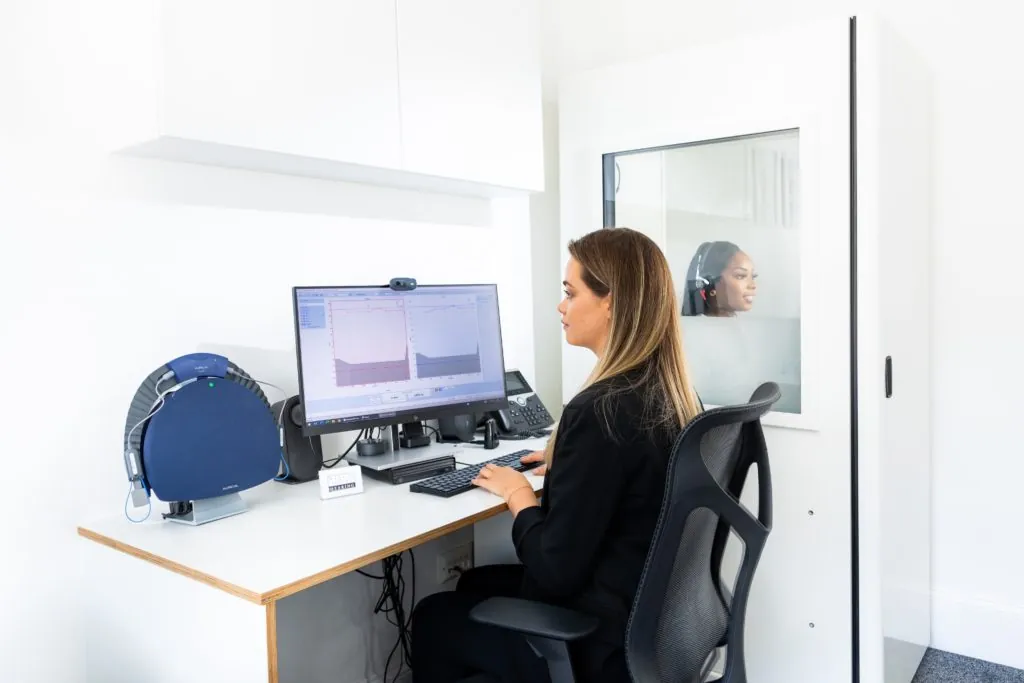
Assessment Results
You will also receive a detailed written report, which can be shared with employers, schools, or other healthcare professionals if needed.
Personalised Plan
Your personalised plan may include listening or auditory training to strengthen processing skills, assistive listening devices to make speech clearer (especially in noisy environments), and practical communication strategies for home, work, or school.
All recommendations are tailored to your lifestyle and listening needs.
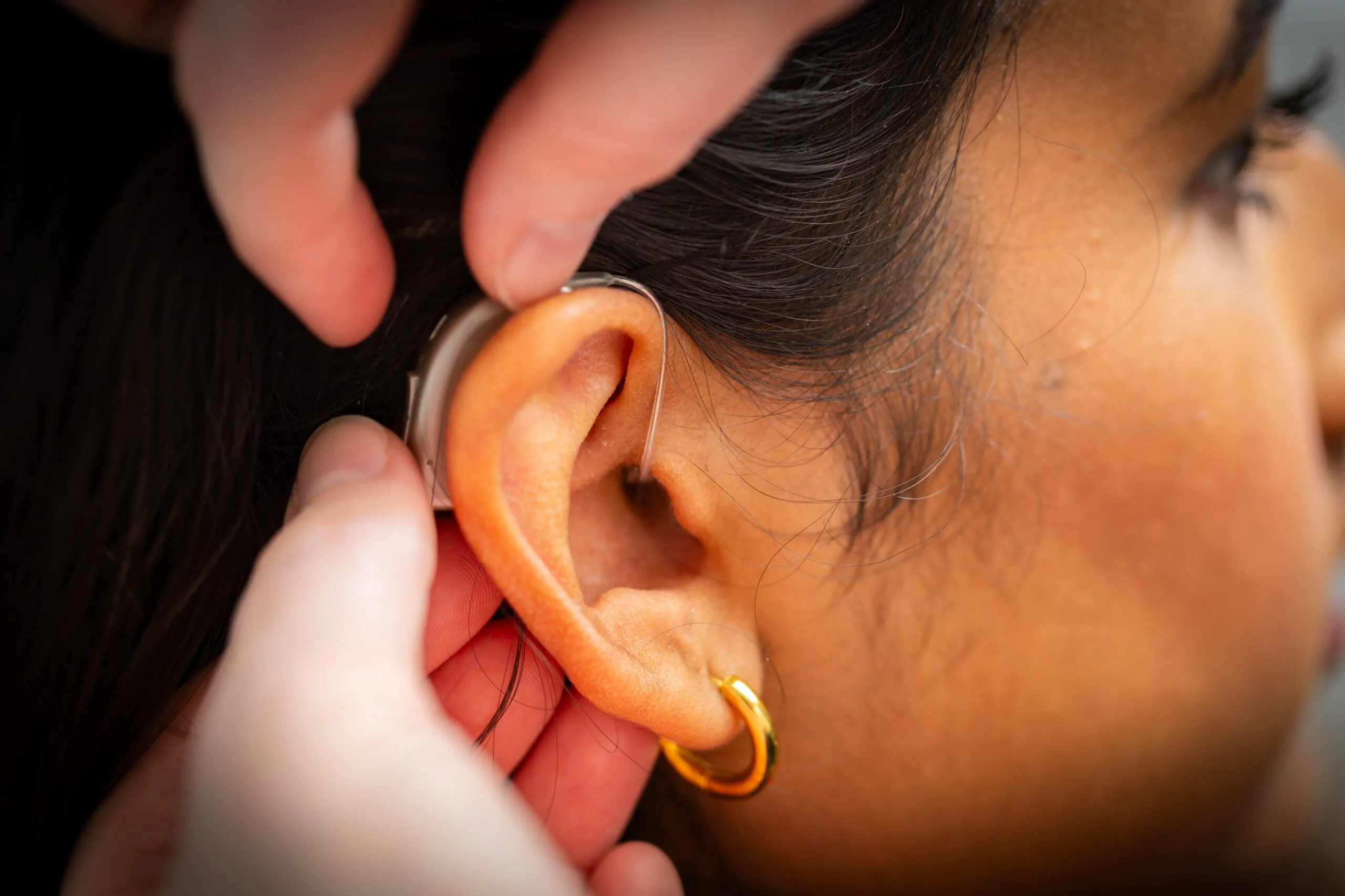
APD Assessment Follow-Up
This helps ensure your care continues to meet your needs as your circumstances change.

Finding Clarity: Iain’s Auditory Processing Disorder Journey
“Eating out with friends is now much more inclusive. I no longer struggle to keep up with conversations at the table. I feel more confident socially and enjoy being part of discussions instead of falling behind. It has restored my connection to the world around me and improved my overall wellbeing.”

Professional Referrals for APD Assessments
Harley Street Hearing provide a specialist APD assessment service for suitable for patients requiring comprehensive assessment and management. If you are an ENT, GP, or healthcare professional looking to refer a patient for expert diagnosis and personalised support, please visit our Refer a Patient page.
Arrange your APD Test with Harley Street Hearing
Harley Street Hearing offer APD assessments at 2 Harley Street and 127 Harley Street, located in the heart of London. Find out more about our London hearing clinics.
Get in touch with your chosen clinic using the contact details below, or fill in the form on this page to make an enquiry.
Frequently Asked Questions
There is no clear consensus to an actual date of Auditory Processing discovery. However, as early as the 1950’s, researchers were starting to become aware of the symptoms of speech processing challenges in some children.
Hearing and listening are a subjective sense, therefore everyone experiences it differently. Because of this it is difficult to describe how it may sound, but it can affect the way one might hear and differentiate speech sounds.
Auditory Processing Disorder does not affect speech and oral production directly; however, it can affect the ability of one to correctly hear and decipher speech. Thus, during early developmental years this can impact speech and language learning.
There are currently no pharmaceutical nor surgical cures for Auditory Processing Disorder. However, there are tools such as auditory retraining techniques, and assistive listening devices that can help patients to overcome the difficulties associated with APD.
Auditory Processing Disorder is not a disability, however the way the symptoms can manifest can make it difficult for someone to go about their day-to-day tasks.
Auditory Processing Disorder and Dyslexia are not the same thing; however, they do share some of the same symptoms and the presence of both can further exacerbate the other.
Strictly speaking, Auditory Processing Disorder is not progressive, but other co–morbid conditions can worsen its symptoms.
If you have noticed recent difficulties with understanding speech in background noise, or difficulties with concentrating or localising sound, this could suggest symptoms of Auditory Processing Disorder, and therefore you should speak with your GP or audiologist about having a test.
Testing for Auditory Processing Disorder is usually done by a specialised clinician (an audiologist) who uses a battery of speech-processing tests to measure an individual’s active listening skills. These skills include localisation of sound and discrimination of both clear and degraded speech, among others.
Auditory Processing Disorder can be caused by a variety of factors. Underlying genetic and developmental conditions such as ADHD and ASD can lead to APD. As well, acquired causes like traumatic brain injuries, repetitive ear infections/auditory deprivation and age-related factors.
Auditory processing is the complex process of the brain interpreting, and making sense of the auditory information that was received by the ear and auditory system. APD can arise when this operation is disrupted, or is not functioning correctly, and can lead you to have difficulty understanding speech, especially in noisy environments. It can affect both children and adults of varying ages.
Auditory Processing Disorder does not affect speech and oral production directly; however, it can affect the ability of one to correctly hear and decipher speech. So during early developmental years this can impact speech and language learning.
Auditory Processing Disorder and Autism Spectrum Disorder (ASD) are not the same thing; however, ASD affects the development of the brain, and this can lead to the development of Auditory Processing Disorder. The signs and symptoms of both may overlap with one another and can make identifying one from the other more challenging.
Symptoms of auditory processing disorder (APD) can overlap with those of other developmental disorders, such as ADHD (attention deficit hyperactivity disorder) or ASD (autism spectrum disorder), and this can make it difficult to know if one has APD without having had a thorough assessment. There are celebrities who have spoken openly and shared their experiences about having other developmental disorders but not about APD.
Strictly speaking Auditory Processing Disorder is not a genetic disorder, but one can have family history or genes that may predispose them to develop APD. Other causes can include prenatal factors, diseases of the ear, trauma, or injury to the head and/or ears, and age-related changes.
Auditory processing is the complex process of the brain interpreting, and making sense, of the auditory information that was received by the ear and auditory system. Auditory Processing Disorder can arise when this operation is disrupted or is not functioning correctly and can lead you to having difficulty understanding speech, especially in noisy environments.