

At 29, trumpet player Luke has spent years surrounded by the powerful, immersive sound of live music. But when he developed mild tinnitus in his right ear, everything changed. What began as a subtle noise soon became a source of stress, especially on tour, where quiet hotel rooms made it impossible to ignore.
“It was difficult to sleep in quiet spaces, and the anxiety around how it could affect my career was really stressful,” Luke explains. “Tinnitus in one ear can sometimes point to more serious issues, so going through scans and tests made it even harder.”
Luke discovered Harley Street Hearing through the Musicians’ Union and came to us for a hearing test to assess his hearing health and identify any factors contributing to his tinnitus, custom ear plugs to protect his hearing during his performances, and in-ear monitors (IEMs) to give him clear, controlled sound on stage, without risking further damage.
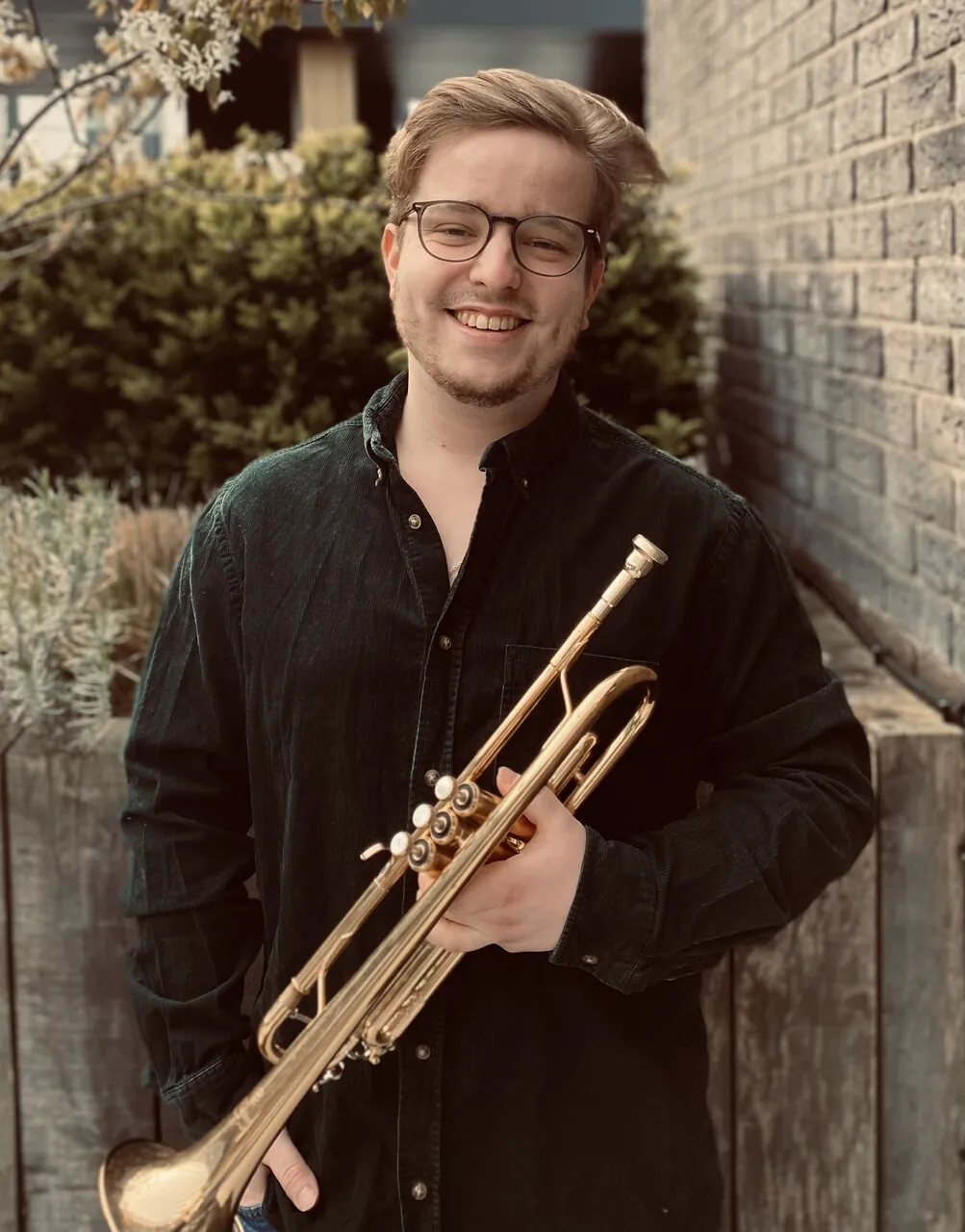
His first appointment was with audiologist Matt Frost, whose support made an immediate impact.
“When I told Matt about the tinnitus only being in one ear, he advised me to contact the NHS to get scans to rule out anything more serious due to its asymmetric nature. Thankfully everything came back clear. Having that reassurance was huge.”
Matt also helped Luke understand how years of standing on one side of a drum kit had contributed to the issue and how consistent hearing protection could help him manage it.
“Matt was so kind and understanding. He really got the implications this had on my life as a professional musician. Having someone my age who understood the realities of a musician’s lifestyle was invaluable. He is a real credit to the team at Harley Street Hearing.”
Today, Luke feels more informed, reassured, and in control. His tinnitus has reduced, and he has learned to see it as a useful signal.
“I’ve been able to reduce my tinnitus by following Matt’s guidance on hearing protection and on understanding safe noise-exposure levels, including recognising when I may have been exceeding them. His advice on using IEMs, as well as learning how anxiety can intensify symptoms, has also been really helpful. My tinnitus now acts as a warning system. If it spikes, I know things are too loud and I need protection. In a roundabout way, I’m grateful for it now.”
For the IEMs, adjusting took some time, especially as a brass player.
“As a trumpet player, the occlusion effect (the feeling of being blocked in the ears) can make IEMs tricky, and playing with them can be challenging at first. Over time, however, I’ve grown more accustomed to them. Most importantly, I know I am protecting my hearing and preserving my career for years to come, which makes it all worth it.”
His message to other musicians is simple: “Prevention is the best medicine. Do not put your head in the sand, especially if you are worried. I feel so much better knowing I am doing everything I can to protect my hearing while still enjoying playing the trumpet.”
If you would like to find out more about tinnitus, custom hearing protection or in-ear monitors, contact us.