
When it comes to choosing a hearing aid, you’ll find that Bluetooth is now pretty much an industry standard across most modern hearing aids. In this guide, we’ll walk you through how Bluetooth hearing aids work and which ones are best-in-class and may work for you.
What are Bluetooth hearing aids?
Bluetooth is available on innumerable devices today, allowing you to connect 2+ devices via shortwave radio signals to transmit information like images, sound, or text without cables or wires. This technology is perfect for hearing aids, enabling them to connect to each other and to your electronic devices via Bluetooth and internal radios known as T-coils.
That means you’ll be able to hear phone calls, music and more in much better clarity! Additionally, every Bluetooth-enabled hearing aid has its own app that lets you manually adjust its settings directly on your device.
However, it’s important to note that there are also different types of Bluetooth connectivity, which we’ll cover in this blog. Each Bluetooth type has its own pros and cons based on the protocols used, and each hearing aid has its own level of Bluetooth compatibility.
With that in mind, let’s take a look at some of the best Bluetooth-compatible hearing aid models on the market.
Hearing aids with classic Bluetooth.
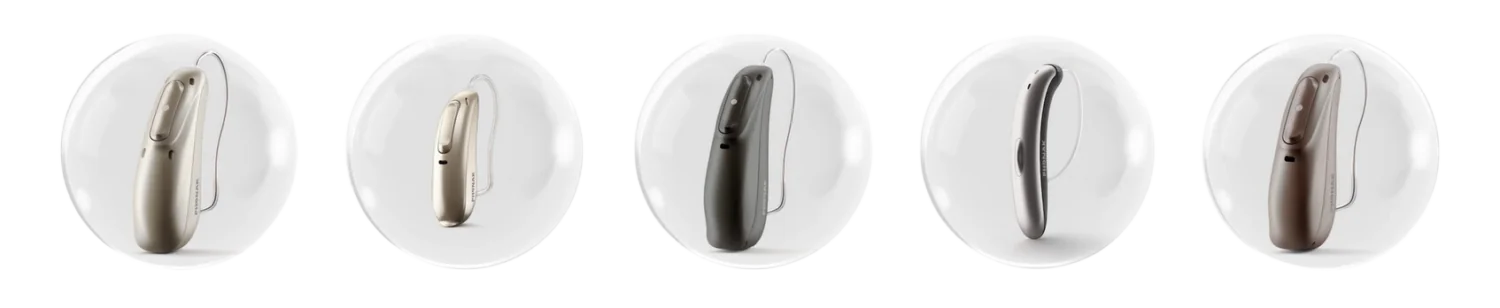
Classic Bluetooth is what we would consider the more traditional platform that we all know and use across our devices. For the best hearing aid with classic Bluetooth, we’re looking at the Phonak Lumity range.
One of the key advantages of classic Bluetooth is that it can connect to any phone with Bluetooth streaming capabilities. This means it doesn’t matter if you’ve got an old or new smartphone, or even a landline phone with built-in Bluetooth, you’ll already be set up and ready to go with Phonak Lumity.
Hearing aids with LE Audio.
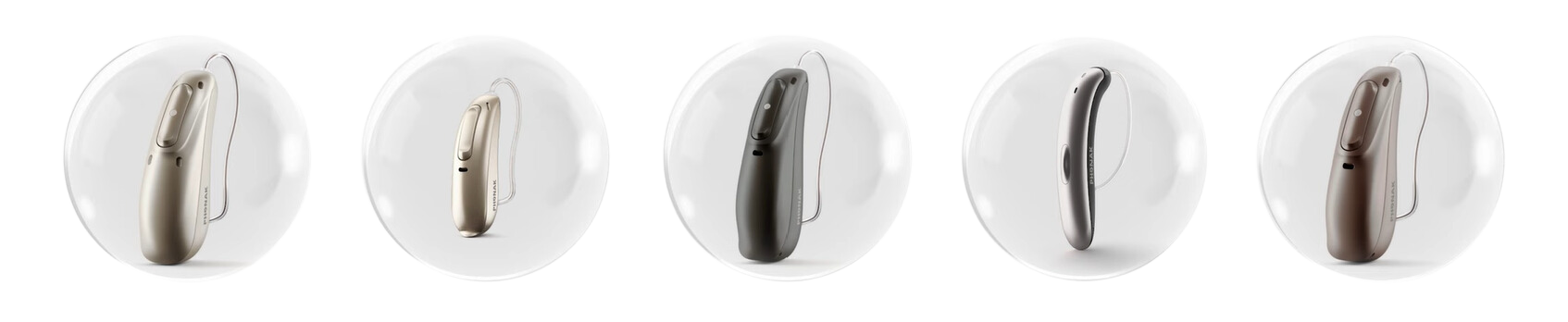
The next group of hearing aids use something called LE Audio. This is a low-energy Bluetooth protocol and was the original way hearing aids connected to the iPhone back in 2010.
Best hearing aids with LE Audio integrated:
LE Audio works well, but there are some limitations. For example, there is no bidirectional Bluetooth for Android devices, meaning that with iPhones, you can have completely hands-free phone calls. There are also limitations on which phones support LE Audio Bluetooth streaming.

Hearing aids with Auracast-ready LE Audio.
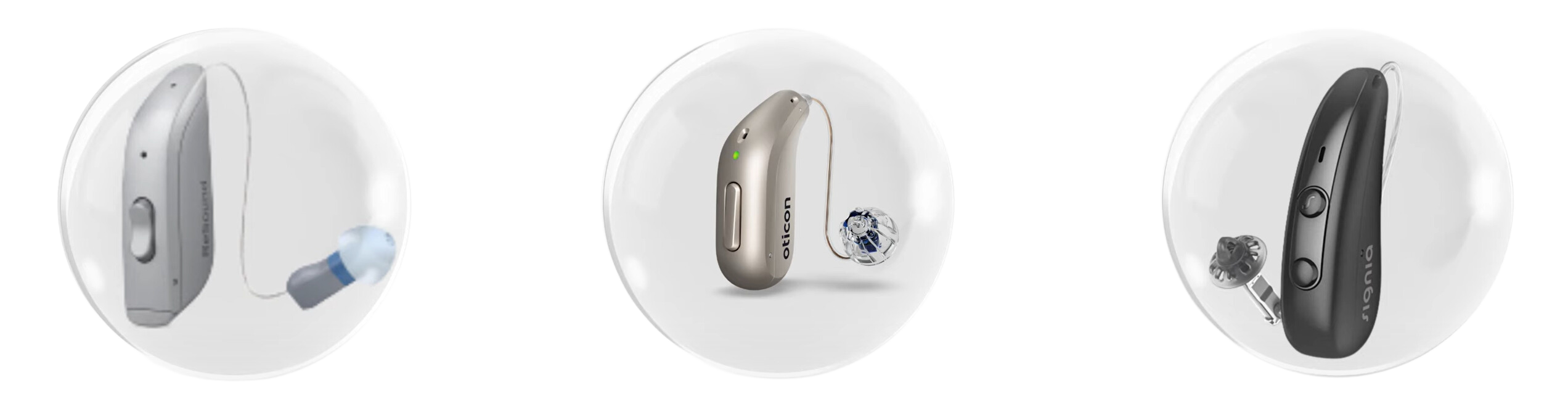
As we get more advanced with Bluetooth connectivity, this next group of hearing aids have the newest version of LE Audio, which makes them Auracast-ready:
Auracast is the future of connectivity, which, once fully rolled out, will allow public venues to stream any sound with a higher quality and lower battery consumption than we’ve seen from any streaming technology in the past, directly to both of your hearing aids.
In the next few years, we’re likely to see Auracast-broadcast audio replace the century-old hearing loop systems in public venues, allowing multiple hearing aid users to connect to audio in public spaces simultaneously.
What are the downsides of this? It’s only as good as how many public venues have it installed, but at the moment, it’s still in development. Regardless, it’s great to see hearing aid manufacturers getting ready for the rollout of this Auracast transmission.
Read more: What is Auracast? The Bluetooth technology revolutionising audio
Hearing aids with no Bluetooth connectivity.
We mentioned at the start of this blog that most modern hearing aids have Bluetooth connectivity, but not all of them. The Widex Moment RIC 10 doesn’t support Bluetooth or a telecoil.
There are plenty of options when it comes to connectivity, so it’s hard to imagine a world without Bluetooth being built into hearing aids, but this is something to be aware of when choosing the right hearing aid for you.

Which Bluetooth hearing aid is best for you?
This may or may not come as a surprise, but the phone you have can directly impact the features you’ll get from your hearing aid, with iPhones being the most versatile.
As you’re doing your research, each hearing aid manufacturer has a compatibility list on their website that details which phones are compatible with its particular hearing aid. So, it’s worth checking that out or speaking to your audiologist to ensure you’ve got access to all of those features before choosing any particular hearing aid.
Of course, the best way to determine the right hearing aid for you is by working directly with an audiologist who can accurately diagnose your hearing loss and make recommendations accordingly.
Harley Street Hearing is London’s largest independent hearing clinic, with four locations across London. Our team of clinical audiologists can advise you on the best hearing aid. As a completely independent audiology company, we can offer a wide range of hearing aids from all major UK manufacturers. Get in touch with us to book an appointment.
Best Bluetooth Hearing Aids Reviewed
Matthew Allsop is a Partner at Harley Street Hearing and the content creator for Hearing Tracker, where he shares his honest opinions on all things related to hearing health and hearing aid technology. Hearing Tracker is the world’s first truly independent resource for hearing aid customers. You can watch his video on the best Bluetooth hearing aids for 2024 below.
Enjoy this article? You might be interested in some of our others: