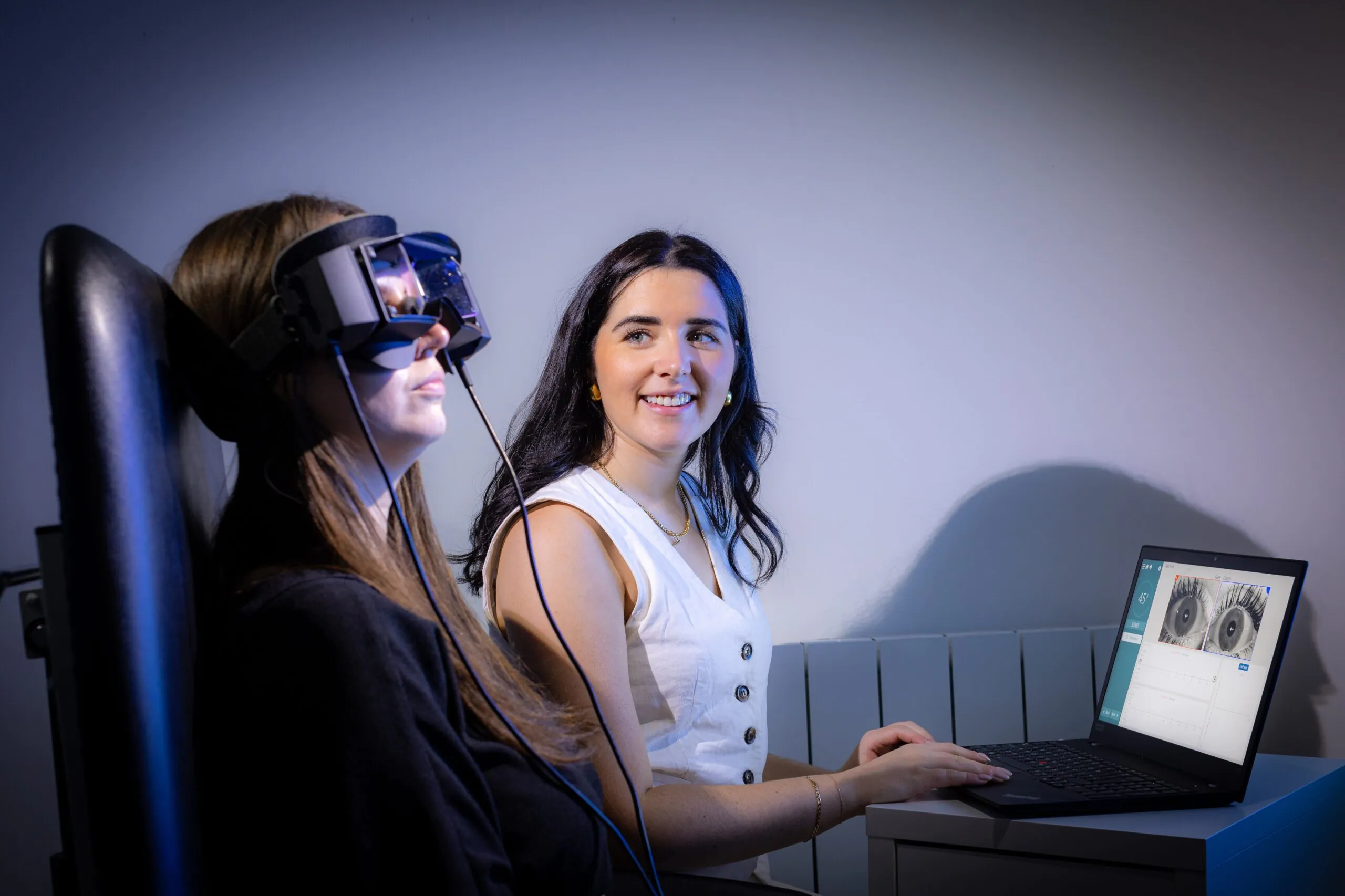
If you’re looking for a balance clinic, here are six important things to consider.
1. A comprehensive range of balance tests
There is no single test that assesses every part of the balance system. Different vestibular tests examine different functions, so having access to a comprehensive range of assessments can help build a more detailed clinical picture.
Depending on your symptoms and referral, testing may include:
- Video head impulse testing (vHIT) to assess the function of the semicircular canals and associated vestibular pathways.
- Vestibular evoked myogenic potential (VEMP) testing to provide information about the utricle and saccule and vestibular pathways.
- Caloric testing to assess how each ear’s balance system responds independently.
- Videonystagmography (VNG) to record and analyse eye movements.
- Positional testing to investigate positional vertigo, including benign paroxysmal positional vertigo (BPPV).
- Hearing assessments, as the hearing and balance organs are both located within the inner ear.
At Harley Street Hearing’s Balance Clinic, we offer a comprehensive range of audiovestibular tests, allowing the appropriate combination of assessments to be selected according to your symptoms and referral.
2. Enough time for a thorough assessment
Balance testing can take time, particularly when several different assessments are required. When comparing clinics, it’s worth finding out how long is allocated to your appointment and whether the required tests can be completed in one visit.
At Harley Street Hearing, a typical comprehensive balance consultation is allocated up to three hours. This gives our audiologists time to understand your symptoms and relevant medical history and, wherever appropriate, complete the required testing within the same visit.
This can also reduce the need to return for multiple separate testing appointments.
3. Clinicians with specialist balance expertise
Having access to specialist technology is important, but so is the expertise of the clinician carrying out and interpreting your tests.
Look for a clinic with professionals who have specialist experience in audiovestibular diagnostics and regularly assess people experiencing dizziness, vertigo and imbalance.
This expertise is particularly important because individual test results often need to be considered together to understand how different parts of the vestibular system are functioning.
At Harley Street Hearing, balance assessments are carried out by Clinical Scientists and senior audiologists with specialist expertise in vestibular diagnostics.
4. Collaboration with other medical specialists
Dizziness and balance problems can have many possible causes, and they don’t always originate in the inner ear. Vestibular testing therefore often forms one part of a wider medical investigation.
At Harley Street Hearing, patients undergoing comprehensive balance testing require a referral from an ENT specialist, Audiovestibular Physician or Neurologist. This helps ensure that other potential medical causes have been considered and that the most appropriate vestibular investigations are carried out.
Our audiologists work closely with referring medical specialists, providing detailed diagnostic information that can help inform the next stage of your care.
5. Clear next steps following your assessment
Specialist balance testing isn’t just about completing a series of tests. The results need to contribute meaningfully to understanding and managing your symptoms.
Before choosing a clinic, find out what happens once testing has been completed. Will your results be shared with your referring specialist? What happens if further investigation or treatment is recommended?
Following your assessment at Harley Street Hearing, the results provide your referring specialist with detailed information about how your vestibular system is functioning.
Depending on the findings and your individual circumstances, the next stage of care may involve further medical investigation or treatments such as vestibular rehabilitation, medication, lifestyle adjustments or other appropriate interventions.
6. Access to testing when you need it
Persistent dizziness and balance problems can have a considerable impact on everyday life, affecting everything from working and travelling to exercising and socialising.
The speed at which you can access specialist assessment may therefore be an important consideration.
Balance testing is available through the NHS and provides access to valuable specialist care. However, waiting times and the availability of individual vestibular tests can vary between NHS trusts.
Private balance testing can provide an alternative for people who want faster access to specialist assessment.
When comparing private balance clinics, consider how quickly you can be seen, how much time is allocated to your assessment and whether the necessary tests can be carried out during the same visit.