

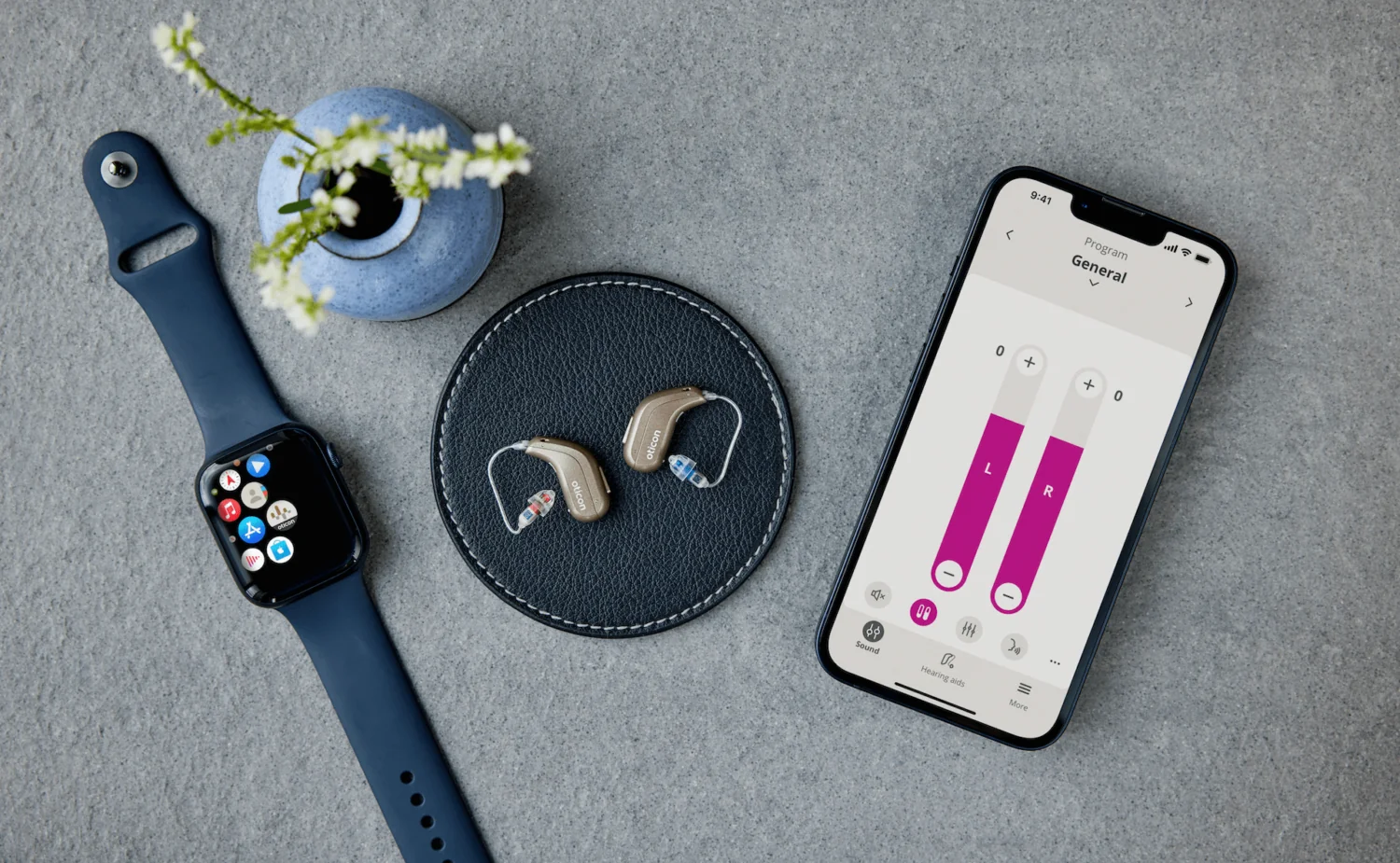
The Oticon Intent represents a significant shift in hearing technology for Oticon. There are solid reasons why you should consider buying it, but there are also valid reasons why it might not be the right choice for you.
After tracking extensive real-world data from patients fitted with these hearing aids, alongside feedback from online communities like Reddit, Hearing Tracker, and Facebook, I have compiled their experiences.
In this blog, we’ll discuss the pros, the cons, and the unanswered questions. We will also see how they compare to the older Oticon Real hearing aids.
Sound quality
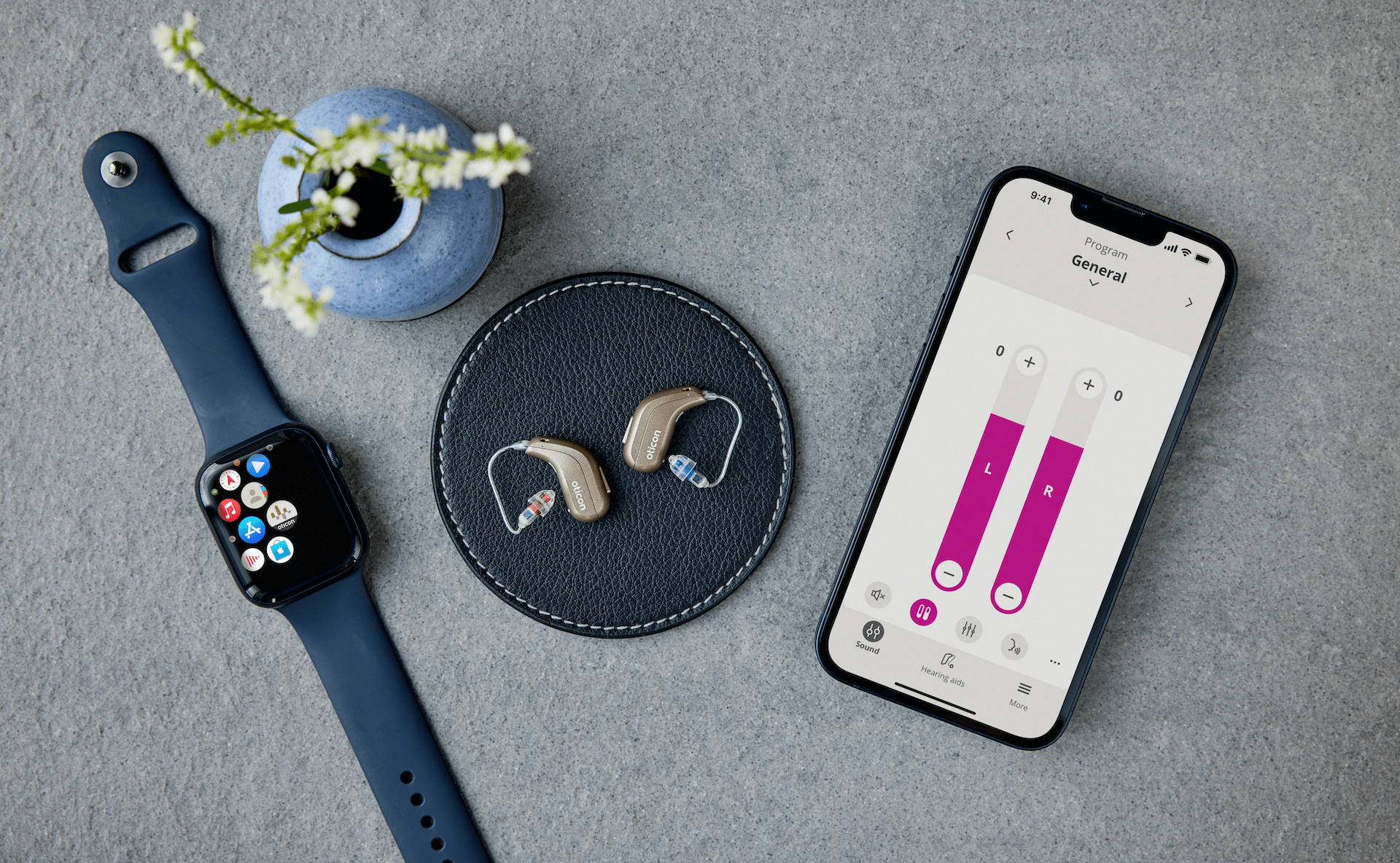
Overall, Oticon’s audio achievements with this hearing aid are excellent. The clarity is the sharpest we have seen from the brand to date. It features up to 24 fitting bands. This gives your audiologist immense flexibility when programming the devices during real ear measurements.
The Sirius Chip & DNN 2.0
Oticon introduced a powerful processing chip in this line called Sirius. The brand claims this chip delivers a 12 dB noise suppression. According to their data, this results in 35% more access to speech cues compared to the Oticon Real. It also offers 10% better sound quality, 13% more nuance, and 10% higher listening comfort.
These upgrades rely heavily on MoreSound Intelligence 3.0, a suite of features focused on overall sound quality. This system includes Deep Neural Network (DNN) 2.0. This technology uses offline artificial intelligence to train the hearing aid to adjust automatically to your specific environment. The older Oticon Real used DNN 1.0, which was trained on 12 million sound scenes. The Intent utilises version 2.0, which features an upgraded, expanded database of environmental sound scenarios.
4D sensor technology
Working alongside DNN 2.0 is Oticon’s 4D sensor technology. While Oticon call this a world-first feature, other major brands already use motion sensors. Companies like Phonak, Signia, Starkey, and ReSound use them, and in some cases, for a couple of generations.
The purpose of motion sensors is to measure your body and head movements to direct the microphones dynamically. Patients report that this directional system works well. However, some users note that you must slightly exaggerate your head movements to trigger the microphone in the right direction.
Adaptibility & real-world clarity
Oticon excels at seamless transitions between quiet and noisy settings via its general automatic program. However, this performance requires customisation. Your audiologist must tailor these settings to your specific lifestyle. They do not work perfectly right out of the box. A skilled clinician will ask targeted questions to programme them effectively.
Some tech experts argue that the Phonak Lumity platform allows for deeper fine-tuning within a similar price bracket. Even so, this should not be a dealbreaker if you prefer the Oticon sound profile. Most clinic feedback shows a noticeable leap in clarity for both quiet and loud environments. However, a few users feel the incremental change does not justify upgrading from recent models.
Enhanced connectivity
Historically, Bluetooth connectivity was a notable weakness for Oticon users. The Intent aims to fix this with Bluetooth Low Energy Audio, known as LE Audio.
LE Audio is a highly efficient form of Bluetooth built specifically for audio streaming. It results in lower battery consumption and higher audio streaming quality from your phone. The technology also supports public venues. Transmitters in concert halls, conference centres, train stations, and theatres can stream a speaker’s voice directly into your hearing aids.
The shift to Auracast
Oticon is not alone in this digital shift. Competitors like ReSound, Signia, and Jabra are also LE-ready. Auracast broadcast audio is steadily replacing century-old loop systems in public spaces. This allows multiple hearing aid users to connect to the same audio feed simultaneously. User feedback on this new connectivity setup remains mixed, so let’s break down the specific pros and cons.
The pros
On the positive side, fewer users report dropped connections compared to older models. Patients also note that the Bluetooth operating range is significantly wider.
Keep in mind that you need a compatible modern smartphone to access full LE Audio benefits. This includes devices like the Google Pixel 7 or newer, and the Samsung Galaxy S23 or Z-series foldables.
The cons
Despite improvements, the Bluetooth connection is not always as stable as it should be. Competing manufacturers often handle multi-device stability more smoothly.
Most users interact with multiple tech devices daily, such as a laptop, tablet, and smartphone. The Intent still struggles with seamless switching between active devices. To switch smoothly, you often have to turn Bluetooth off on one device before enabling it on the next. This process can feel inconvenient.

New controls
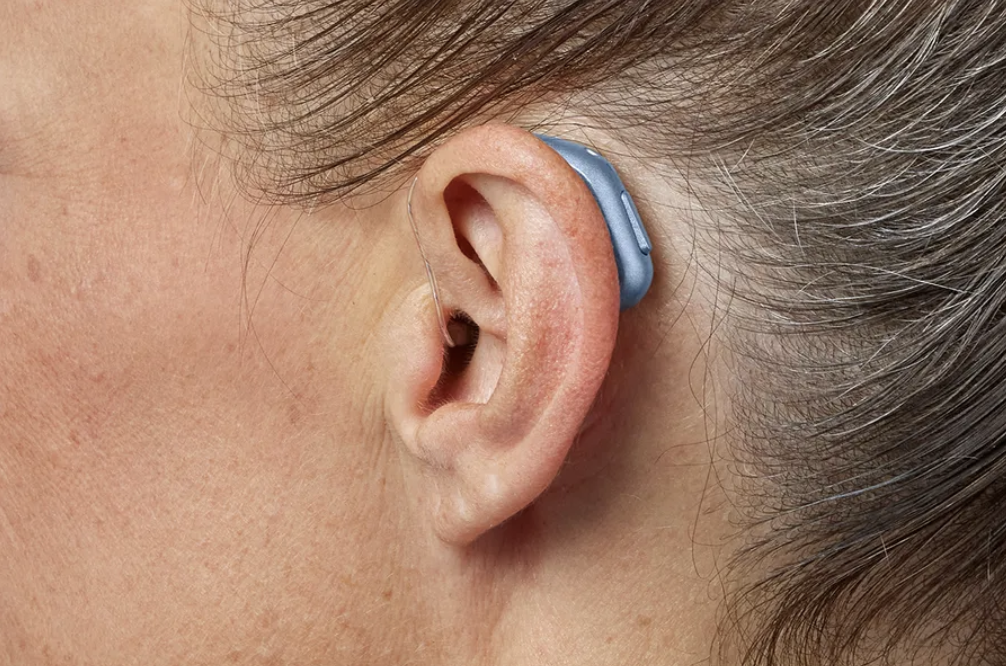
The inclusion of motion sensors allows for upgraded physical controls. Instead of fumbling for the small button on the back or pulling out your phone, you can use tap controls. Users can accept or end phone calls by simply double-tapping their ear.
However, this feature feels somewhat limited compared to the competition. For example, the Phonak Lumity family allows you to do much more with tap gestures. With Phonak, you can pause music, skip tracks, and activate voice assistants like Siri or Google Assistant. I hope to see Oticon expand these capabilities in future firmware updates.
Extended battery life
Oticon’s new lithium-ion batteries require a 2-hour charge rather than the 3-hour charge from the Oticon Reals, and for that, you’ll get 20 hours of life from them, so ultimately they should last you for a full waking day. If, however, you need a boost for some reason, a 30-minute turbo charge will give you 8 hours of life.
However, the likes of Signia and Starkey will now run for 30-plus hours per charge, and this is mainly because, just like with all lithium-ion batteries, over time their health declines. To combat this, some hearing aid manufacturers are building in extra capacity as a buffer so that when this battery life starts to deplete, they should still last you for a full working day.
Oticon have thought about this in a slightly different way, and they’re hoping or claiming that with their improvement in battery technology, it should last for 20 hours now and continue to do so for more than 4 to 5 years. Of course, this isn’t something that I’ve been able to test; however, I’ve had no reports of any battery-related issues for those that I’ve fitted with the Oticon Intents so far.
Adaptability and comfort
The final positive before we come into the negatives is how versatile the Oticon Intents are when it comes to their suitability. They could be adapted to fit mild, moderate, severe, or profound hearing loss, and this can be done in three different ways. Firstly, by changing the power of the receiver – the fitting ranges for each receiver include a 60, 85, 100, or 105 dB power level. So, if your hearing loss falls within the shaded area, then the speaker is technically the most appropriate for your degree of hearing loss.
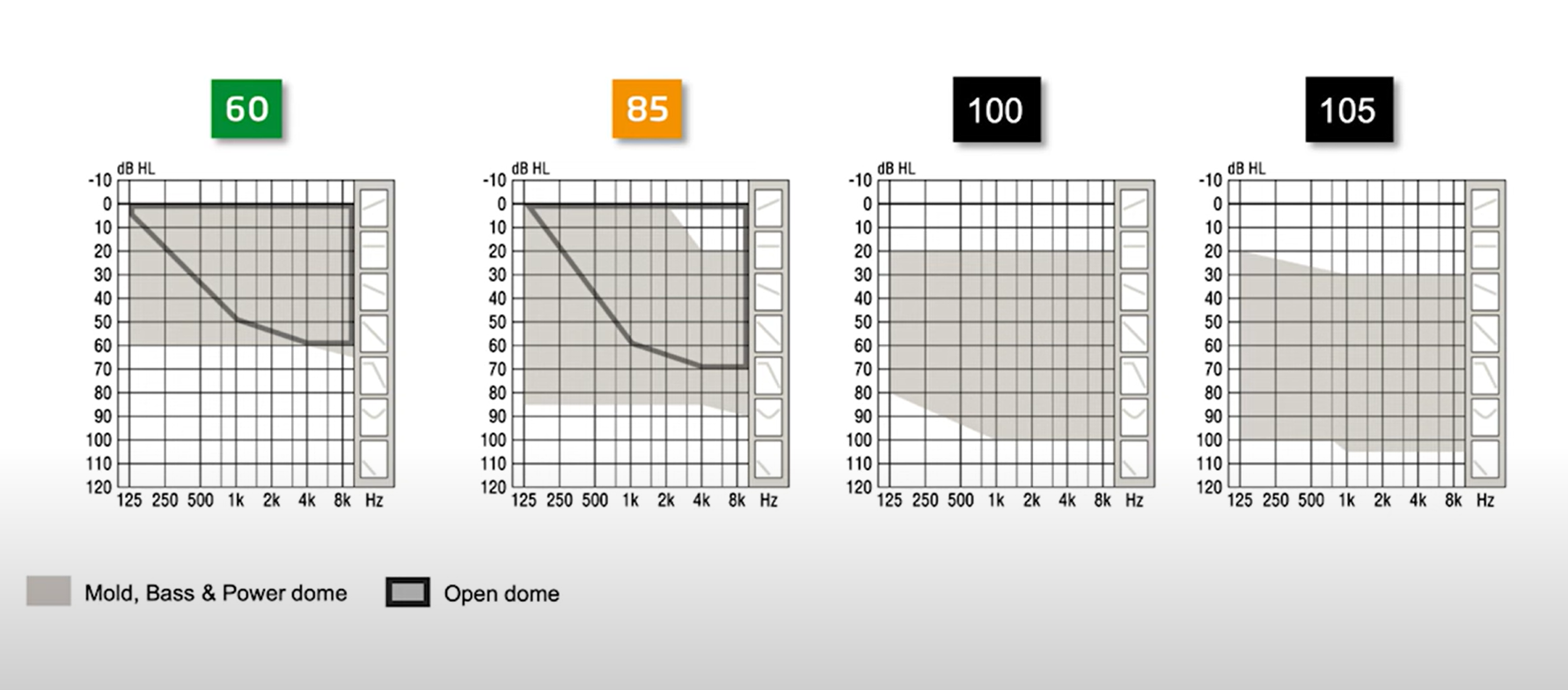
The second physical adjustment comes down to the tip on the end of your receiver. The way that a hearing aid is coupled to your ear can completely transform the way that that hearing aid will sound, and it could change that in a few different ways – from how much clarity it can provide, to how well you cope with background noise, and even how decent the streaming of music or phone call sounds when they’re coming from your phone. Oticon, similar to other hearing aid manufacturers, give you the choice between open domes, closed-vented domes, power domes, and custom moulds, so you have to make sure that you ask your audiologist which is the most appropriate for you.
Another development relates to the receivers themselves, which are a new self-calibrating design which Oticon are boasting has an accuracy of plus one or minus one dB, and this should result in 57% more accurate gain.
The new design of these wires is a lot better than their previous design. They have a different kink to those from the Oticon Reals, which means that they sit better in the valley over the tragus for some hearing aid users, and this can result in a far neater fit. The same goes for their 105 dB flex mould update, which used to sit quite proudly from the ear canal, and now they’re far neater and on par with the cosmetics that we see from other hearing aid manufacturers.
The negatives
This wouldn’t be a fair review if I didn’t also discuss the key areas that I think let the Oticon Intent down, so let’s take a look at some of the not-so-good features.
Batteries
In my opinion, there are two weaknesses around batteries that patients have been complaining about, and the same kind of complaints seem to have come up online as well.
Oticon have made the same mistake that Phonak did with their Lumity family of hearing aids a couple of years back and solely released it as a rechargeable hearing aid. Phonak realised the error of their ways and followed up with a disposable battery version, and I’m sure Oticon will do the same at some point in the near future. But for now, if you want an Oticon Intent, you don’t have the option of a disposable battery.
The other backward step in these hearing aids is that with the Oticon Real, it was possible to open up the battery door and switch out those lithium-ion batteries if there was an issue, rather than having to send the whole hearing aid back to Oticon. Now, with a turnaround time of up to two weeks for a repair, that’s a long time to be without your hearing aid, and previously Oticon was the only manufacturer that gave us the ability to be able to change those batteries on-site, and sadly, they’ve now taken it away.
Controls
This new tap control feature is a great addition, and although it isn’t as versatile as other hearing aid manufacturers, Oticon have caught up with the competition. The downside is that this has come at a cost, and the Oticon Reals had a rocker switch in the past, which were essentially two buttons on the back of each of your hearing aids, which were super easy to find and could be programmed with multiple different functions, such as volume control, a program button, or a mute function, etc.
Oticon have gone back to their old design from a few generations ago with the Open family of hearing aids that had a single push button. In my opinion, there are far more hearing aid users using program buttons than tap control features, and I think it’s a bit of an error to have dropped that rocker switch.
Streaming quality
As I’ve previously mentioned with LE Audio, we’re supposed to see a significant improvement in the sound quality of streaming if you’ve got one of those phones that I listed earlier. The thing is, I haven’t had anybody report an improvement, with or without any of those new phones.
Another thing to note is that the sound quality of streaming has been addressed with other hearing aid manufacturers, with the hearing aid fitting software allowing audiologists to go in and fine-tune the equaliser based on your individual feedback.
Oticon don’t have this option, and I would have thought that an update in their technology from a Bluetooth point of view would have been the perfect opportunity to do so. Instead, it’s possible to make the sound louder or softer and fuller or brighter.
Smart charger
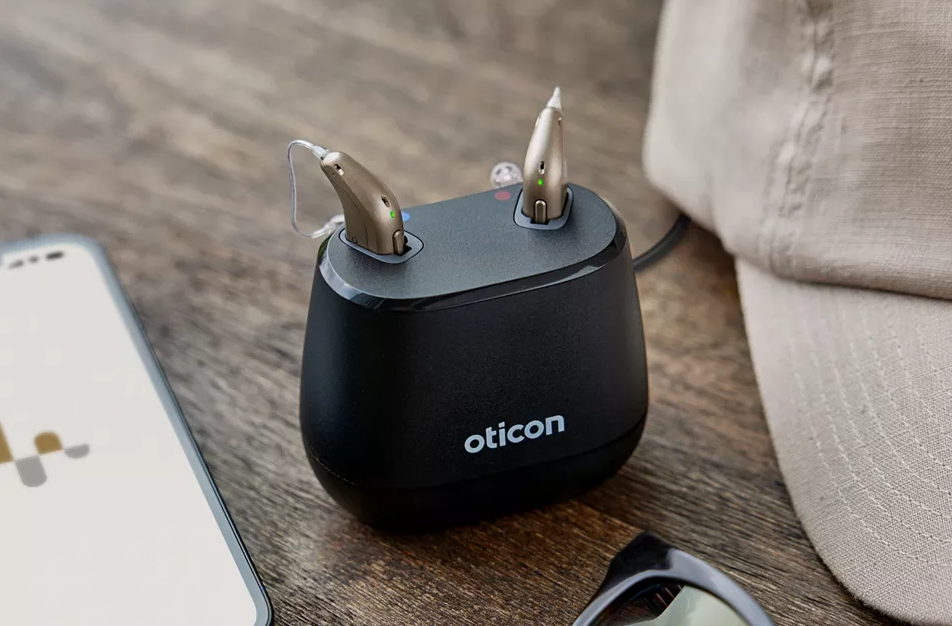
It took about three years from when Oticon released their rechargeable hearing aids to when they brought out their original smart charger, which is a hearing aid charger that stores three days’ worth of battery life so that you can go away for a long weekend and not have to worry about having access to power.
Because Oticon don’t have a disposable battery version, I thought they would have ensured that this new release would cater to as many people as possible, especially those that travel a lot and may not want rechargeable hearing aids anyway. So if you’re keen on charging on the go, for now, you’re better sticking with older versions of Oticon technology or looking to one of the other hearing aid manufacturers that have all the tech to fulfil your needs.
It’s unclear as to whether Oticon intends to release a smart charger or a battery version of the Oticon Intent anytime soon, but I’m sure with your feedback and that of any audiologists out there, they’ll look at doing so, and I hope it’s in the near future.
Oticon Intent Hearing Aid Review: 5 Reasons to Buy it and 5 Reasons to Not!
Matthew Allsop is a Partner at Harley Street Hearing and the content creator for Hearing Tracker, where he shares his honest opinions on all things to do with hearing health and hearing aid technology. Hearing Tracker is the world’s first truly independent resource for hearing aid customers. You can watch his video on the Oticon Intent below.
Enjoy this article? You might be interested in some of our others: