

Noticing a ringing, buzzing or whooshing in just one ear can be unsettling. Whether it comes on suddenly or develops gradually, experiencing tinnitus on one side often raises questions about what might be causing it.
One-sided tinnitus, also known as unilateral tinnitus, is a common reason people seek advice from an audiologist. More often than not, the cause is straightforward, such as earwax buildup or the tail end of a cold. However, because it can occasionally indicate an underlying issue that warrants closer review, having it evaluated by a professional is always a wise step.
Why would tinnitus only affect one ear?
Your hearing works as a pair. Sound travels through each ear separately, then to the brain, which blends the two signals together.
When something affects just one ear, such as a blockage, inflammation or a change in hearing, the brain receives less sound from that side. It can compensate by turning up its own internal volume, and that extra amplification can make its background activity audible as ringing, humming or hissing on that side.
Tinnitus in both ears often relates to factors affecting your overall hearing system, such as age-related changes or general noise exposure. Tinnitus in one ear, however, suggests something specific is affecting that side. While this can be a localised issue, it can also stem from asymmetrical noise exposure, such as playing the violin, using a single-sided radio headset, or driving regularly with an open window.
Common causes of tinnitus in one ear
Ear wax
Earwax buildup is a potential cause that can often be managed effectively. While earwax is natural and protective, it can build up and become impacted, particularly if you use cotton buds, wear hearing aids or earplugs, or have narrow ear canals. A buildup often causes a muffled feeling or a sensation of fullness, and addressing the blockage may help relieve associated tinnitus symptoms.
Please don’t try to dig it out yourself, as that often pushes it further in. Our audiologists offer ear wax removal using microsuction and irrigation, and we can usually see you the same day.
Blocked eustachian tube and middle ear infections
Your eustachian tube connects the back of your throat to your middle ear and helps equalise pressure on both sides of your eardrum. After a cold, sinus infection or hay fever flare-up, the tube on one side can become swollen or blocked, and fluid can collect behind the eardrum. This often brings a muffled, full feeling, sometimes with a low hum, clicking or popping. It usually clears as the congestion does, but if it doesn’t, or if your ear is painful, see your GP. Read more in can blocked ears cause tinnitus?
Noise damage on one side
Noise doesn’t always hit both ears equally. Gunfire, a loud bang close to one ear, and years of using power tools on one side can affect one ear more than the other. So can wind noise from an open car window, or playing an instrument that sits close to one ear, like the violin. Over time, the tiny hair cells in that ear’s inner ear can become damaged. Tinnitus often occurs at the same pitch as the hearing that’s been affected.
If you’re regularly around loud noise, custom hearing protection can help prevent further damage.
Ménière’s disease
Ménière’s disease is an inner ear condition caused by a build-up of fluid pressure deep in the ear. It usually starts in one ear and comes with a recognisable set of symptoms, which include episodes of spinning vertigo lasting from 20 minutes to several hours, a feeling of fullness or pressure in the ear, hearing that fluctuates (especially low pitches), and a roaring tinnitus.
Jaw and neck tension
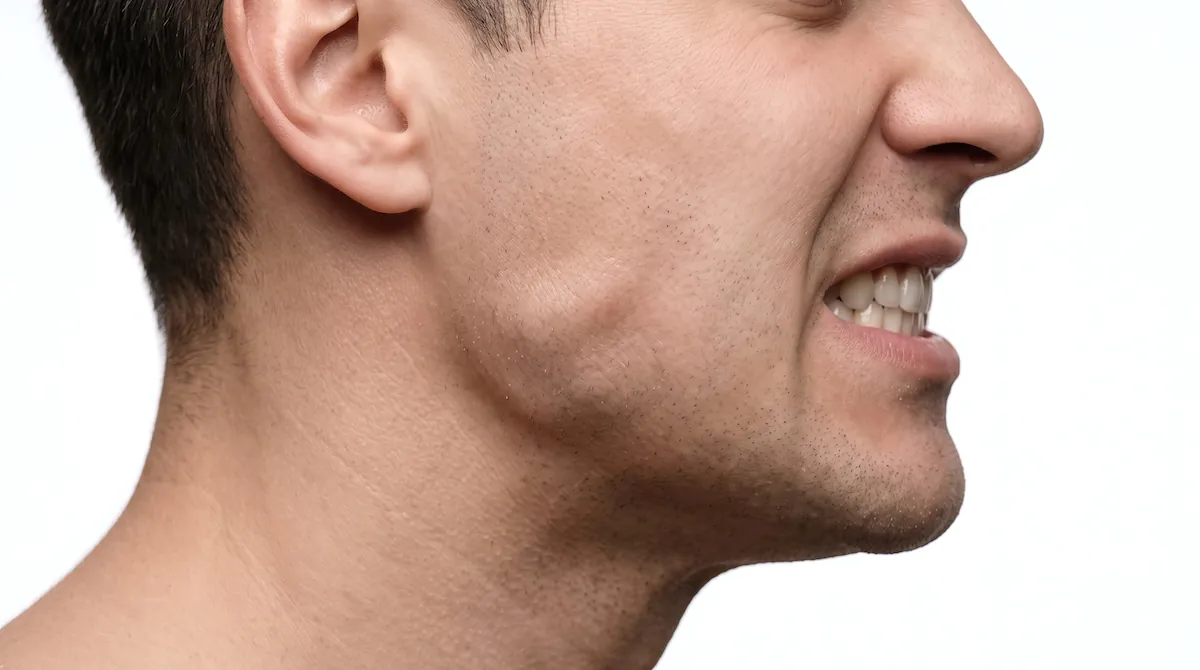
The nerves around your jaw joint (the temporomandibular joint) and neck are closely linked to your hearing pathways. Clenching or grinding your teeth, a jaw problem on one side, or a neck injury such as whiplash can all trigger tinnitus or change how it sounds, often in the ear on the same side. A common giveaway is that your tinnitus changes when you move your jaw or turn your head.
Stress
Stress doesn’t usually cause tinnitus on its own, but it can make existing tinnitus more noticeable, sometimes on one side more than the other. We look at this more closely in can stress cause tinnitus in one ear?
Pulsatile tinnitus
If the sound in your ear is a rhythmic whooshing or thumping in time with your heartbeat, this is pulsatile tinnitus. It can be caused by changes in blood flow in the vessels near your ear, or sometimes by pressure changes around the brain. Occasionally, it’s simply that you’ve become more aware of normal blood flow.
Because pulsatile tinnitus often relates to vascular or cardiovascular factors, it is recommended to see your GP for an initial medical evaluation.
Acoustic neuroma
This is often the cause people are most worried about, so it’s worth being clear. An acoustic neuroma (also called a vestibular schwannoma) is a non-cancerous growth on the nerve that connects your inner ear to your brain. It’s rare. It usually grows slowly and tends to cause gradual hearing loss in one ear, tinnitus on that side, and sometimes unsteadiness.
It’s diagnosed with an MRI scan and managed by ENT specialists, often by simply monitoring it. Checking for it is one reason one-sided tinnitus, especially with hearing loss on the same side, should be looked into rather than left unchecked.
When to get urgent help
Contact your GP as soon as possible if your tinnitus in one ear comes with:
•A sudden drop in hearing in that ear
•Severe dizziness or a spinning sensation
•Weakness, drooping or numbness in your face
•A sudden, severe headache
•A recent head or neck injury
Book a non-urgent check with your GP or an audiologist if the tinnitus has lasted more than a few weeks, keeps coming back, is getting worse, or you’ve noticed your hearing is gradually getting worse on that side.
What happens at your assessment?
We’ll start by talking things through when you first noticed the sound, whether it’s constant or comes and goes, and whether you’ve had any fullness, dizziness or changes in your hearing. Your audiologist will then examine your ear and ear canal to check for wax, infection or fluid behind the eardrum.
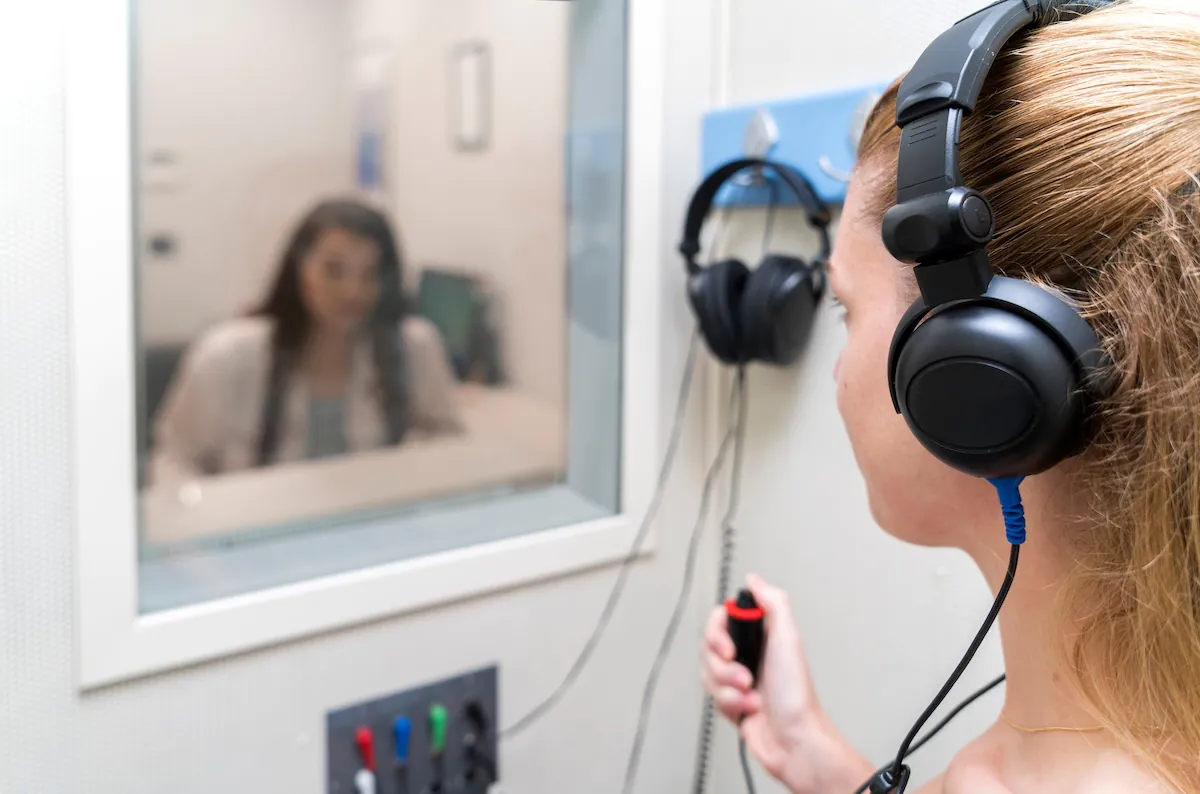
Next comes a full hearing test, checking each ear separately across a range of pitches. This shows up even in small differences between your left and right ears.
If your results show a difference between your ears that we can’t explain, or your symptoms suggest something that needs a closer look, we’ll recommend you see an ENT consultant, who may arrange an MRI scan. We’ll explain everything as we go, so you leave knowing exactly where you stand.
Get your one-sided tinnitus checked
If you’ve been putting off getting your ear looked at, hoping the sound will fade on its own, you’re not alone. It’s one of the most common things we hear. The problem is that waiting usually means more nights spent lying awake, listening to it, and more time spent wondering what it might be.
We’re here to support you well beyond that first visit. Whatever’s behind the sound in your ear, the sooner you know, the sooner you can start feeling like yourself again. Book an appointment today.