

Looking for the most advanced hearing aid technology for 2026? Well, look no further. The year of 2025 saw some incredible advancements in hearing aids, with releases from major manufacturers including cutting-edge, never-before-seen features.
In this blog, we’ll list our top picks from leading hearing aid brands including Phonak, Oticon, Signia, Starkey, ReSound and Widex, comparing their features and outlining what’s unique for each of them. Hopefully, we’ll be able to guide you in the right direction to find the best hearing aid for you.
If you’re interested in coming in to Harley Street Hearing for a consultation please call 020 7486 1053 or contact us here.
Best Hearing Aids
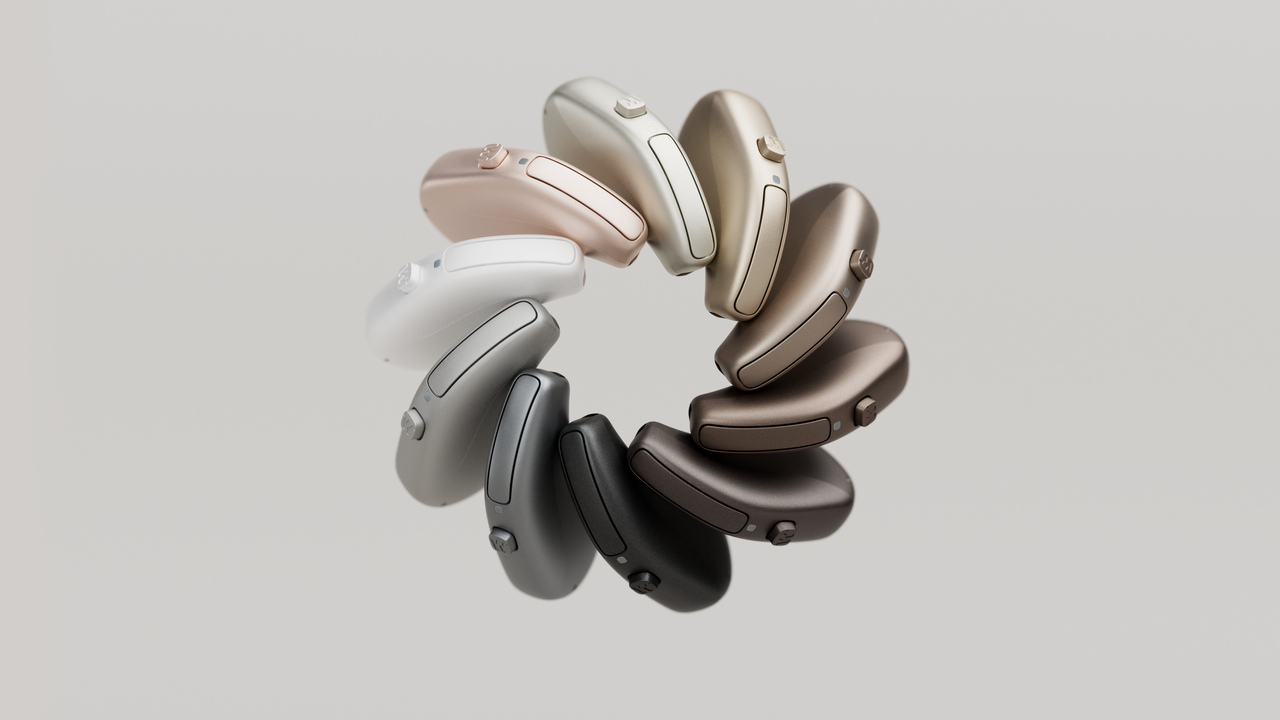
We’ll start by comparing them all physically and then throughout this blog, we will compare all of their individual features to help you make an informed decision.
Phonak Infinio Ultra
Starting off strong with the Phonak Infinio Ultra range.
Phonak Infinio Ultra R
The Phonak Infinio Ultra R is a rechargeable receiver-in-canal hearing aid designed to deliver advanced speech clarity, intelligent noise management, and reliable all-day performance for a wide range of hearing losses.

Design
The Phonak Infinio Ultra R is designed to prioritise speech clarity, comfort, and ease of use, making it suitable for a wide range of hearing losses and everyday listening needs.
It features a discreet receiver-in-canal design with a rechargeable lithium-ion battery, offering reliable all-day use without the need for disposable batteries. The device is built to provide comfort from first wear, with a shape that sits securely behind the ear while remaining unobtrusive.
Maintenance has been simplified through the use of EasyGuard domes, which help protect the receiver from earwax and reduce the need for frequent cleaning or part replacement.
New features
Phonak Infinio Ultra R introduces several key technology updates, including:
- Phonak SmartSpeech™ Technology
- Delivers up to 61% better speech understanding and up to 45% reduction in listening effort, helping users feel less fatigued throughout the day.
- Automatic Environmental Adjustment
- Integrated technology continuously senses the listening environment and automatically adjusts settings to optimise performance in different situations.
- Improved Sound Quality and Comfort
- Designed to deliver clear, natural sound and a comfortable listening experience from the moment the hearing aids are worn.
- EasyGuard Domes
- A sealed membrane helps prevent earwax from entering the receiver, simplifying daily maintenance and improving long-term reliability.
- CROS Infinio Compatibility
- Can be paired with CROS Infinio devices for users with single-sided or asymmetric hearing loss.
Phonak Infinio Ultra Sphere
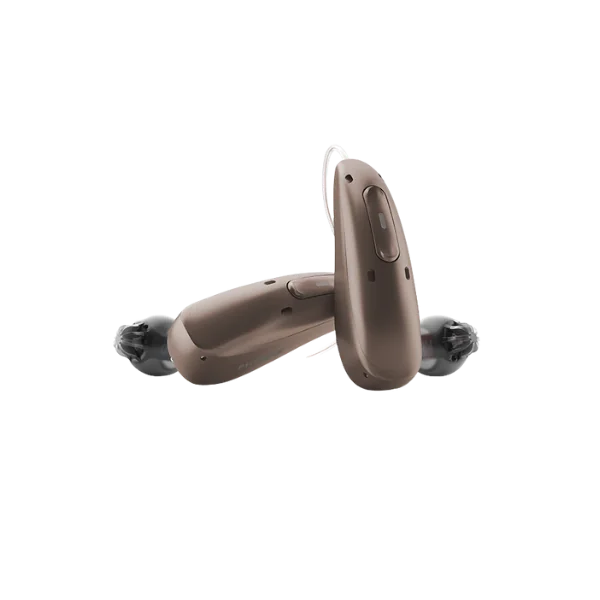
The Phonak Infinio Ultra Sphere is a rechargeable receiver-in-canal hearing aid featuring Phonak’s real-time AI processing to significantly improve speech understanding in noisy and complex listening environments.
Design
The Phonak Infinio Ultra Sphere has been developed to address one of the biggest challenges for hearing aid users: understanding speech in noisy and complex environments.
Built on Phonak’s most advanced processing platform, the Sphere model integrates real-time artificial intelligence into a rechargeable receiver-in-canal design. It is engineered to deliver consistent performance throughout the day, with a battery life of up to 56 hours on a single charge.
As with the wider Infinio Ultra range, the device is rigorously tested to meet Swiss engineering standards, ensuring durability and dependable everyday use.
New features
The Phonak Infinio Ultra Sphere introduces ground-breaking technology, including:
- Real-Time AI Speech Enhancement
- Uses artificial intelligence to enhance speech from any direction and from multiple speakers, making conversations easier to follow in noisy environments.
- Spheric Speech Clarity
- Advanced processing that doubles the chances of hearing and understanding individual words in challenging listening situations.
- Designed for Complex Listening Environments
- Particularly effective in places such as restaurants, social gatherings, and busy public spaces where background noise is constantly changing.
- Extended Battery Life
- The rechargeable battery provides up to 56 hours of use, supporting full-day wear without concern over power.
- Swiss Engineering Standards
- Extensively tested to ensure long-term reliability, performance consistency, and build quality.
Oticon Intent
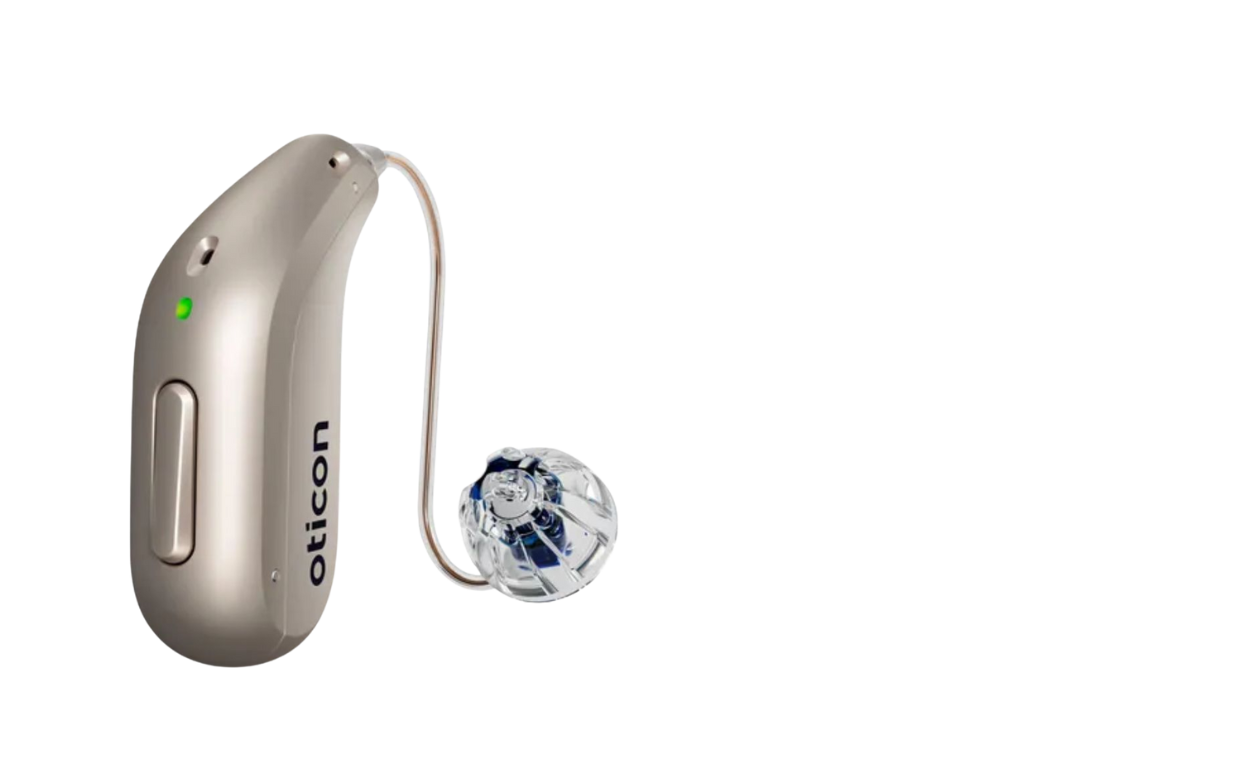
Oticon built on its previous hearing aid technology, Oticon Intent with the Intent miniRITE R Receiver In Canal hearing aid.
Design
The Oticon Intent addresses key user priorities, such as improved hearing in noise and enhanced speech clarity, with a design tailored to modern needs.
Slightly shorter than previous models, the Intent is Oticon’s most discreet Bluetooth receiver-in-canal hearing aid yet. However, it’s marginally bulkier, which might raise concerns about comfort for those who wear glasses.
In terms of usability, Oticon has swapped out the rocker switch from the Oticon Real for a streamlined single button on the back of the device, offering a simpler control interface.
There are nine colours including a new sky blue. You’ll notice that they’re all matted nowadays, so they don’t tend to catch the light. The most popular colour that Harley Street Hearing patients tend to choose is chroma beige.
New features
Oticon Intent’s latest update includes various new features, such as:
- Sirius Chip
- Powers advanced speech clarity improvements in noisy environments with three core features.
- Artificial Intelligence
- Enhanced deep neural network trains the hearing aids to prioritize speech sounds in diverse listening environments.
- Improved Noise Reduction
- Noise management features simplify following conversations in challenging environments like restaurants or crowds.
- Constant scanning delivers key sounds while reducing less relevant noise.
- 4D Sensor Technology
- Motion sensors track conversational activity, head and body movement, and surroundings.
- Adapts to changing needs, boosting speech comprehension by 15%.
- Customizes sound response for specific scenarios, such as waitstaff, greeters, or groups in noisy venues.
- LE Audio Connectivity
- Future-ready broadcast audio enables seamless connections to public venues with better sound quality and reduced battery usage.
- Ideal for concert halls, conferences, train stations, and lectures.
- Telecoil Integration
- Built-in telecoil offers compatibility with existing loop systems in venues like theatres, churches, and other public spaces until LE Audio becomes widespread.
- Rechargeability Updates
- Faster Charging with a full charge reduced to 2 hours (previously 3 hours).
- There are also quick-charge options of 15 minutes (4 hours usage) and 30 minutes (8 hours usage).
- The new Oticon Intent battery is designed to last 4-5 years.
Starkey Omega AI
The Starkey’s Omega AI is an advanced AI-powered hearing aid designed to deliver clear, natural sound in noisy environments while offering modern connectivity, long battery life, and integrated wellness and safety features.
Design
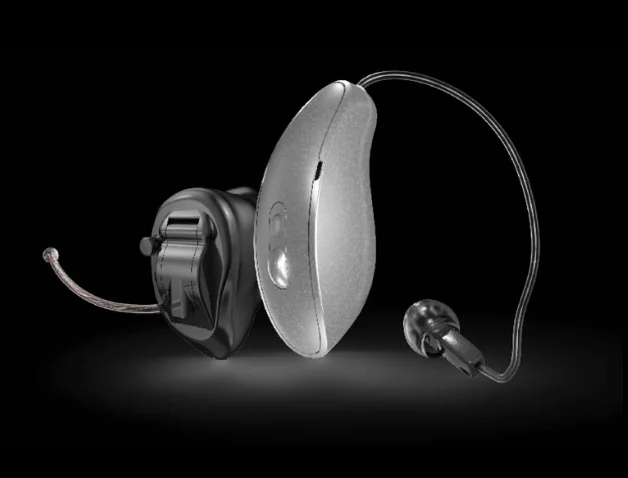
The Starkey Omega AI hearing aids are designed to balance discreet aesthetics with durability and everyday practicality. Available in a range of in-the-ear and receiver-in-canal styles, the Omega AI family caters to different cosmetic preferences and levels of hearing loss.
The devices are built for active, all-day wear, featuring a robust, waterproof construction that helps protect against moisture, sweat, and daily wear and tear. Despite the advanced technology inside, the design remains compact and comfortable, supporting long-term use without compromising performance.
Rechargeable options are available across the range, reducing the need for disposable batteries and supporting consistent, all-day listening.
Technology
At the core of Starkey Omega AI is an advanced AI-driven processing platform designed to improve how speech and background sounds are identified and managed in real time.
The technology uses machine learning to analyse the listening environment continuously, allowing the hearing aids to adapt automatically as conditions change. This helps prioritise speech while reducing competing background noise, particularly in complex environments such as restaurants, social gatherings, and busy public spaces.
Omega AI also integrates wireless connectivity using Bluetooth LE Audio and Auracast readiness, supporting modern streaming standards while improving sound quality and power efficiency. When paired with the My Starkey app, users can personalise their listening experience and access additional smart features.
Key Features
Starkey Omega AI hearing aids include a comprehensive set of features designed to enhance both hearing performance and everyday usability:
-
AI-driven speech enhancement to improve clarity and understanding in noisy environments
-
Advanced noise management, reducing background, machine, and environmental noise
-
Binaural processing, allowing both hearing aids to work together for improved spatial awareness
-
Bluetooth LE Audio connectivity, enabling direct streaming of calls, music, and media
-
Auracast readiness, supporting future public broadcast audio systems
-
Rechargeable battery technology, providing reliable all-day use
-
Waterproof design, suitable for active lifestyles
-
Wellness and safety features, including activity tracking and fall detection (model dependent)
-
My Starkey app integration, allowing users to adjust settings, monitor usage, and personalise sound
Together, these features position Starkey Omega AI as a hearing aid range that combines advanced sound processing with modern connectivity and lifestyle-focused functionality.
Signia IX
Signia’s exciting new range of hearing aids include the Pure Charge&Go IX, the Pure Charge&Go T IX, the Pure Charge&Go CROS, and the Silk Charge&Go IX, with the Silk Charge&Go IX CROS being the world’s first rechargeable CIC hearing aids.
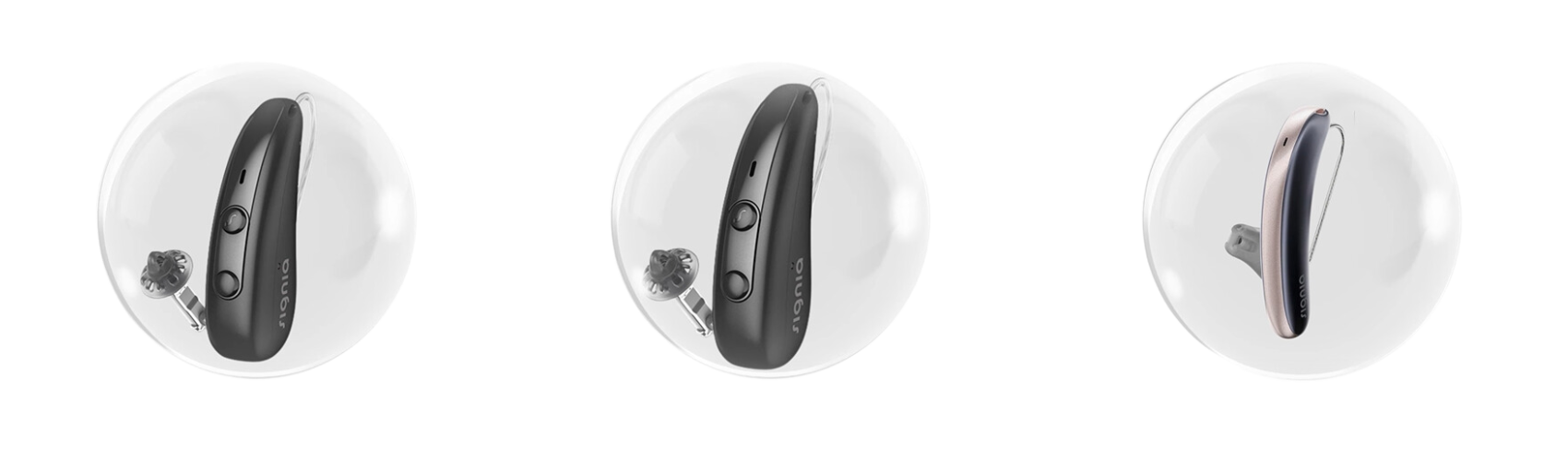
These innovations offer a blend of advanced features designed to improve hearing in noisy environments and enhance user comfort. In this breakdown, we’ll dive into what makes these models unique, their key features, and the significant improvements over previous hearing aid technology.
New Technology: The IX Chip
Signia’s new devices run on the Integrated Xperience (IX) platform, providing cutting-edge features that are set to change the way hearing aids perform in challenging listening environments.
One of the major advancements in these new hearing aids is the integration of Signia’s new IX chip. The chip processes 192,000 data points per second to assess the environment and adjust the hearing aid’s settings for optimal listening. This fast processing allows for the next level of directional beamforming, which directs microphones toward the sounds that matter most, such as a conversation partner while minimising background noise.
While beamforming technology isn’t new, Signia has taken it further with real-time conversation enhancement. This feature not only focuses the microphones forward, but it also tracks and adapts to moving speakers. In noisy environments, the hearing aids can pinpoint multiple conversations and adjust the microphone positioning up to 1,000 times per second, making it easier for wearers to follow conversations, even in difficult settings. According to Signia, 95% of users showed improved performance with this feature enabled.
Pure Charge&Go IX and Pure Charge&Go T IX Features
Among the new models, the Pure Charge&Go IX and Pure Charge&Go T IX are both receiver-in-canal (RIC) styles that cater to varying degrees of hearing loss, from mild to profound.
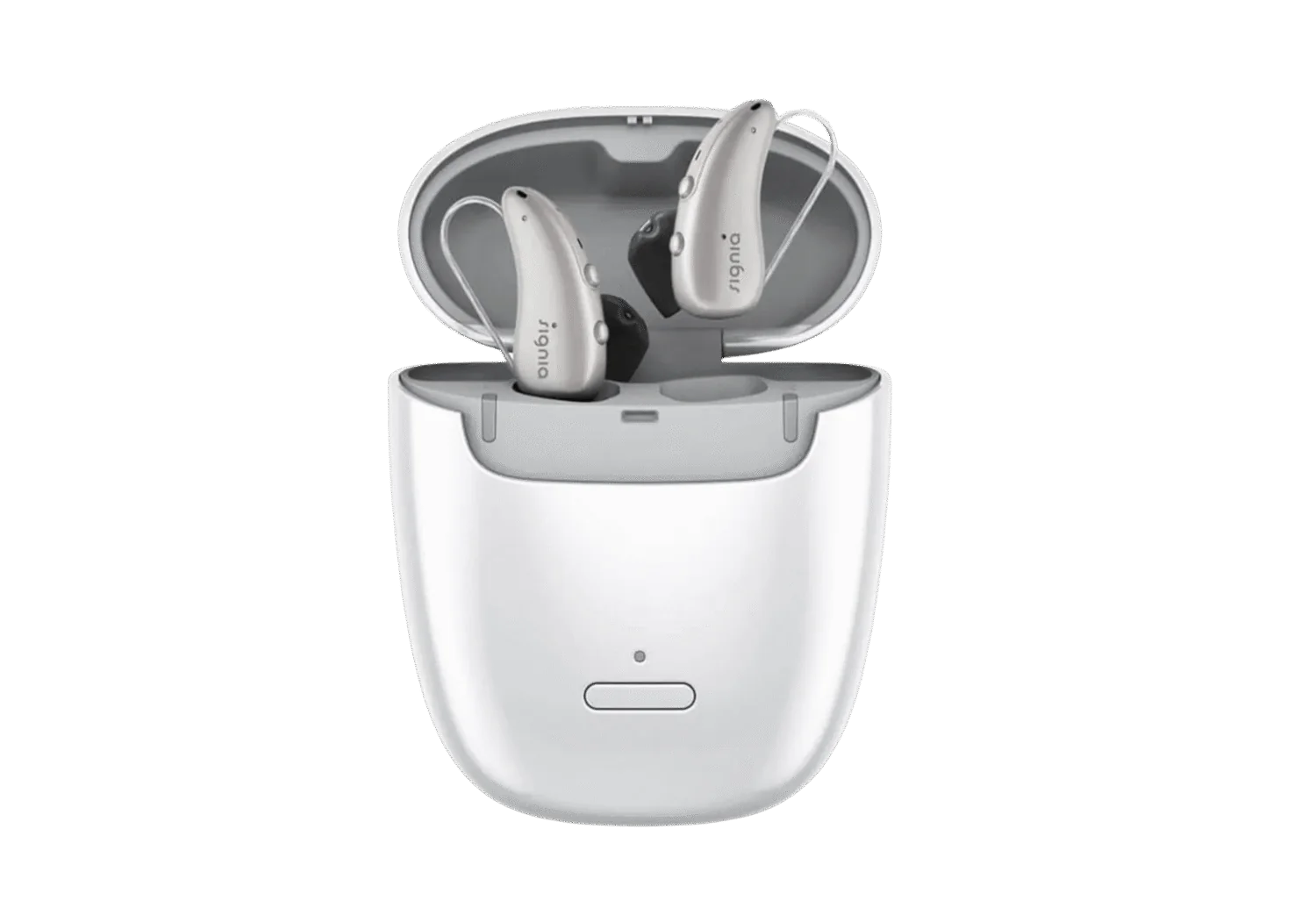 These hearing aids feature Bluetooth connectivity, allowing for direct streaming from iPhones and Android smartphones. The Pure Charge&Go IX provides 24 hours of battery life per charge, while the Pure Charge&Go T IX lasts an impressive 34 hours on a single charge. Only the T IX model is equipped with a telecoil, enabling connection to loop systems in public venues, which is ideal for settings like theatres and churches.
Both models are also compatible with CROS systems, making them suitable for those with hearing loss in one ear and normal hearing or hearing loss in the other.
Silk Charge&Go IX: The First Rechargeable CIC Hearing Aid
The Silk Charge&Go IX is a groundbreaking model as the world’s first rechargeable completely-in-canal (CIC) hearing aid.
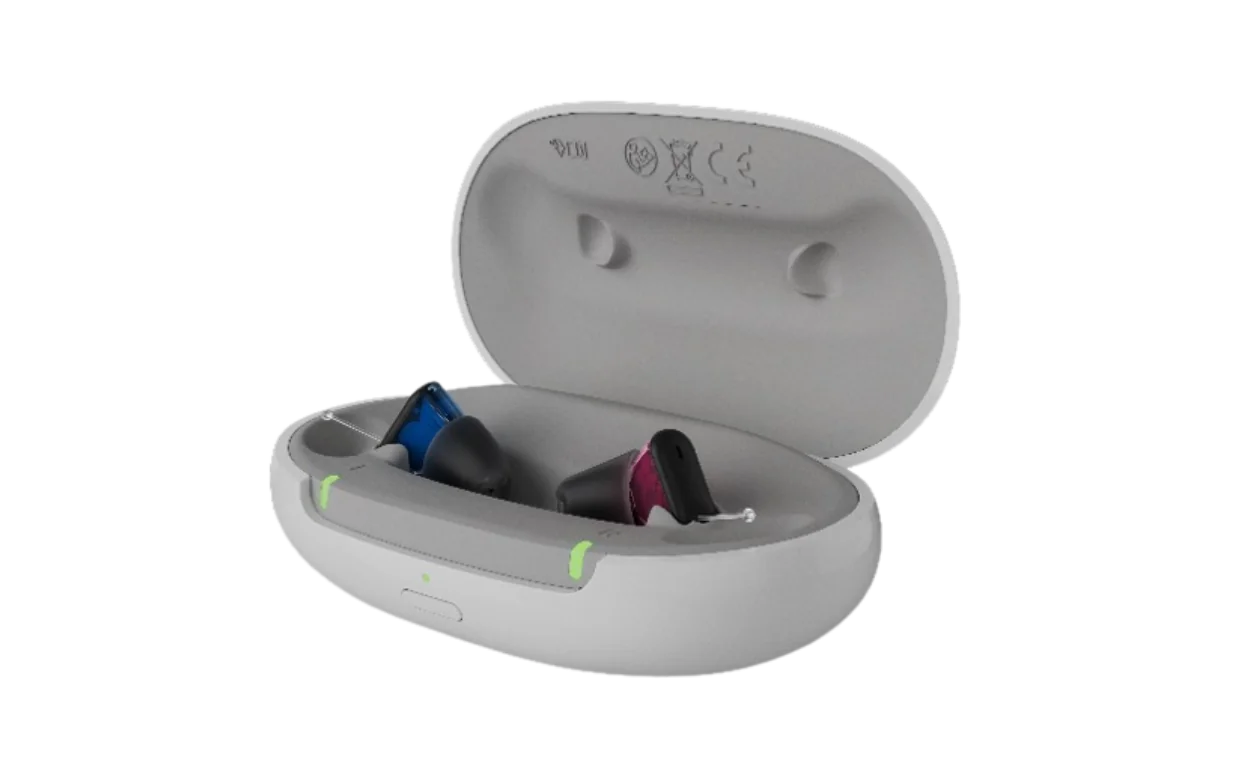
Unlike traditional CIC hearing aids, the Silk models are ready-to-wear devices that do not require a custom ear impression. They come with interchangeable domes for different ear sizes.
One charge provides 24 hours of battery life, and the included case can hold three days’ worth of power for charging on the go. This model also offers excellent discretion, though it lacks Bluetooth capabilities, meaning it’s not suited for those who wish to stream media or phone calls directly to their hearing aids.
Silk Charge&Go IX CROS
The Silk Charge&Go IX CROS model is designed for individuals with unaidable hearing loss in one ear. It works by using a transmitter to detect sounds on the unaidable side and wirelessly transmits them to the better-hearing ear.
This technology offers a 360° sound experience, which can be particularly useful in scenarios like riding in the passenger seat of a car. For the first time, the Silk models offer a rechargeable CROS system, which is a huge step forward for those with single-sided deafness.
ReSound Vivia
ReSound has upgraded their entire hearing aid portfolio to the latest Vivia platform, which brings some significant improvements to their devices.
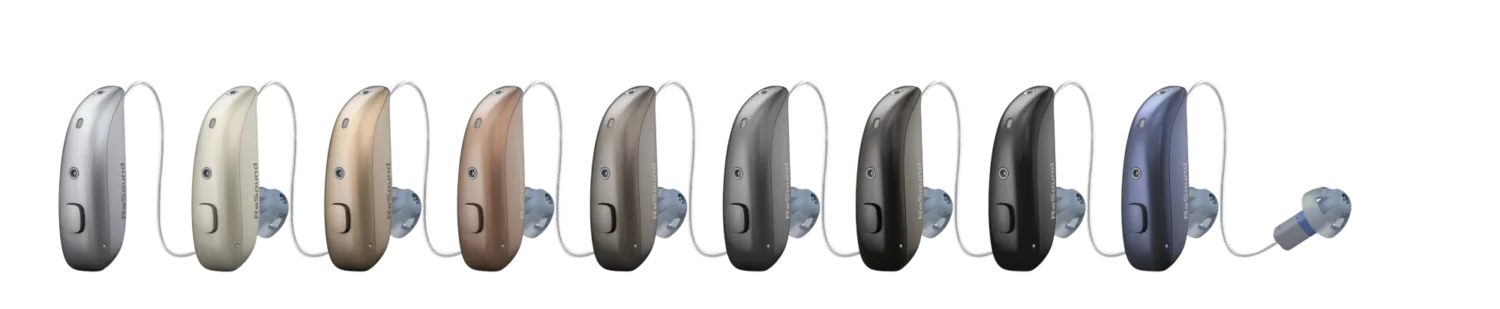
Vivia is designed to enhance hearing aid performance, particularly in challenging listening environments like background noise. The new platform promises better speech understanding, more balanced sound, and the integration of new technologies, setting it apart from previous hearing aid offerings.
Key Features of Vivia Hearing Aids
Improved Speech Understanding in Background Noise
ReSound claims that the Vivia hearing aids offer the best-ever speech understanding in background noise. This achievement is thanks to the combination of several advanced technologies, including:
- Full Microphone: Provides comprehensive sound capture from all directions.
- Binaural Beamforming: Allows for focused listening by directing microphones toward the sound source you want to hear.
- Omnidirectional Listening: Captures environmental sounds and balances them with speech for a more natural listening experience.
With these technologies combined, Vivia hearing aids provide a clearer and more balanced hearing experience, especially in noisy environments. Feedback from users who’ve tried these devices has been positive, making them an excellent option for anyone struggling with background noise. If this is a concern for you, consulting your audiologist about Vivia could be worth considering.
LE Audio and Auracast Connectivity
The second major feature of the Nexia hearing aids is the inclusion of LE Audio, also known as Auracast. This new form of audio connectivity allows hearing aids to directly connect to audio streams from public venues. Imagine walking into a football stadium, a train station, or a church, and hearing the commentary, announcements, or speech clearly through your hearing aids.
This new technology has the potential to replace traditional loop systems in public venues, allowing hearing aid users (and even headphone users) to connect to audio sources more seamlessly. It promises:
- Improved sound quality: With clearer audio transmission and less interference.
- Lower battery consumption: Enhanced efficiency means your hearing aids will last longer while connected.
- No pairing process: Users simply enter a venue, select a setting on their hearing aids, and connect to the audio being streamed, making it incredibly user-friendly.
At present, LE Audio is only useful if public venues have installed the necessary transmitters. These transmitters are costly, and it requires widespread adoption to make the technology viable. However, it is expected that over time, this technology will replace outdated loop systems and become more common. The potential for future implementation is huge, and as this rollout progresses, it could significantly enhance the hearing aid user experience.
Widex Allure
Widex Allure represents the latest evolution of Widex’s signature natural‑sound philosophy. If you’re someone who values lifelike audio, minimal listening effort and a calm, comfortable listening experience even in challenging environments, Allure is designed with you in mind.
What Makes Widex Allure Stand Out
- Exceptional sound clarity through advanced sound processing
- A calm and natural listening experience, even in noisy places
- Ultra‑fast adaptation for smooth transitions between environments
- Comfortable design options suitable for discreet, all‑day wear
- Bluetooth connectivity for calls, music and media streaming
Key Features
Widex Allure introduces improved processing power and refined directionality, allowing voices to stand out more clearly without sounding artificial or overly processed. The result is a sound experience that remains gentle, balanced and easy on the brain.
The Allure platform continues Widex’s commitment to natural sound, bringing enhancements in:
- Speech handling in group conversations
- Noise reduction for comfort in busy environments
- Personalisation via the Widex app
- Feedback control to reduce whistling
Ideal For
- First‑time users who want soft, natural, non‑fatiguing sound
- Experienced users who prefer Widex’s signature tonal balance
- Anyone sensitive to sharp or aggressive audio processing
- Users who enjoy streaming music and calls directly through their hearing aids
If you’ve tried other brands and found the sound too harsh, clinical or overly digital, Widex Allure is often a refreshing change. It aims to deliver clarity without sacrificing comfort—making it one of the most well‑rounded choices for 2026.
Choosing the right hearing aid for you
The world of hearing aids is a difficult one to navigate, and there’s no one-size-fits-all solution. Everyone has different hearing needs and challenges, so it’s important that your audiologist chooses the right technology for you and adjusts it accordingly.
If you’re looking for personalised advice on your perfect hearing technology, contact Harley Street Hearing. Our team of highly skilled clinical audiologists can recommend the most suitable device for your needs.
The best hearing aids for 2026
Matthew Allsop is a Partner at Harley Street Hearing, and a content creator for Hearing Tracker, where he shares his honest opinion on all new hearing aid technology. Hearing Tracker is the world’s first truly independent resource for hearing aid customers. You can view his video where he shares his opinions on the latest hearing aids below.
Enjoy this article? You might be interested in some of our others: